

 DANZ
DANZKiri Te Kanawa Theatre
Auckland
23 July 2026
BIRTHDAY OFFERING
Choreography: Sir Frederick Ashton
Music: Alexander Glazunov, arranged by Robert Irving
Costume Design: Kenneth Rowell
Guest Repetiteurs: Laura Morera, Mark Kay
ULTRA FOLLY
Choreography: Sarah Foster-Sproull
Music: Antonio de Cabezon, Andrea Falconieri, Various Anon.
Costume Design: Donna Jefferis
Lighting Design: Daniel Wilson
STAND TO REASON
Choreography: Andrea Schermoly
Music: Marin Marais, Johann Paul von Westhoff, Ludwig van Beethoven
Costume Design: Donna Jefferis
Lighting Design: Andrew Lees
Reviewed by Jenny Stevenson
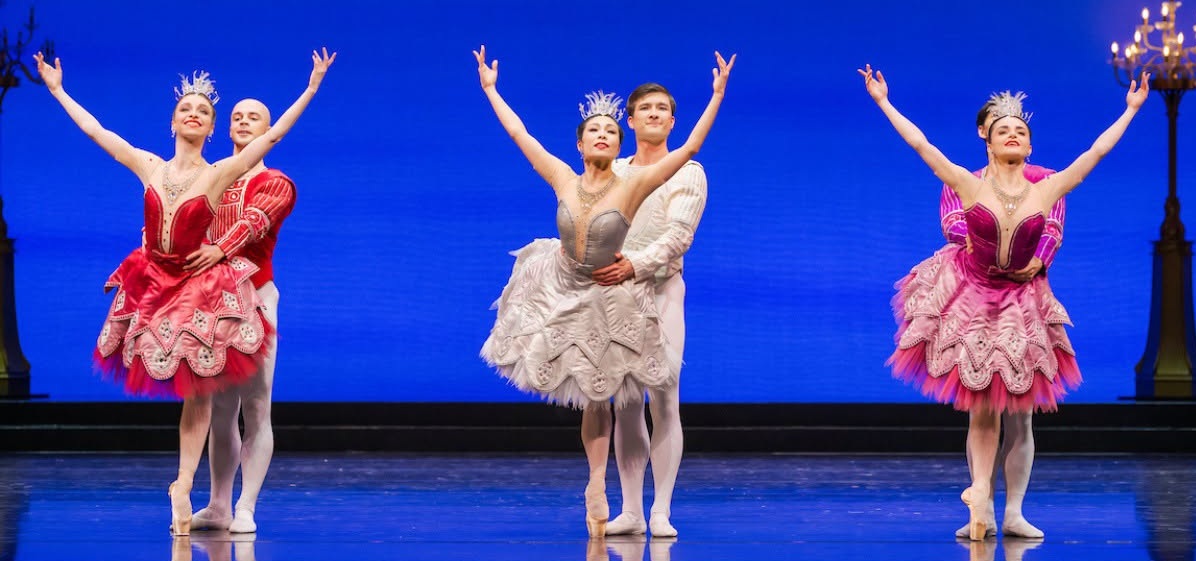
The joy of watching this Royal New Zealand Ballet triple-bill programme, which includes a gem of a ballet by the late, great British choreographer, Sir Frederick Ashton, lies in observing the company’s dancers revel in and master, the challenges that each work presents. Dedicated to the late Matz Skoog, a former visionary artistic director of the RNZB, the Winter Season comprises an intricate, purely classical work, a quirky, contemporary ballet and a fully grounded, contemporary dance work. Each piece requires a different mind-set and precise technical expertise, as well as a specific way in which to hold the body and execute the steps. These dancers prove themselves equal to the task.
First performed in 1956, at the height of the “Golden Age” of British Ballet, Ashton’s Birthday Offering was created to celebrate the dancers (especially the women) in the Royal Ballet at the time of their 25th Anniversary Gala. Performed to music by Alexander Glazunov (arranged by Robert Irving) the work is technically demanding, joyous and witty. Each of the women of the seven couples onstage, has a solo to perform while the men stand as silent sentinels, at the back of the stage, in attentive appreciation.
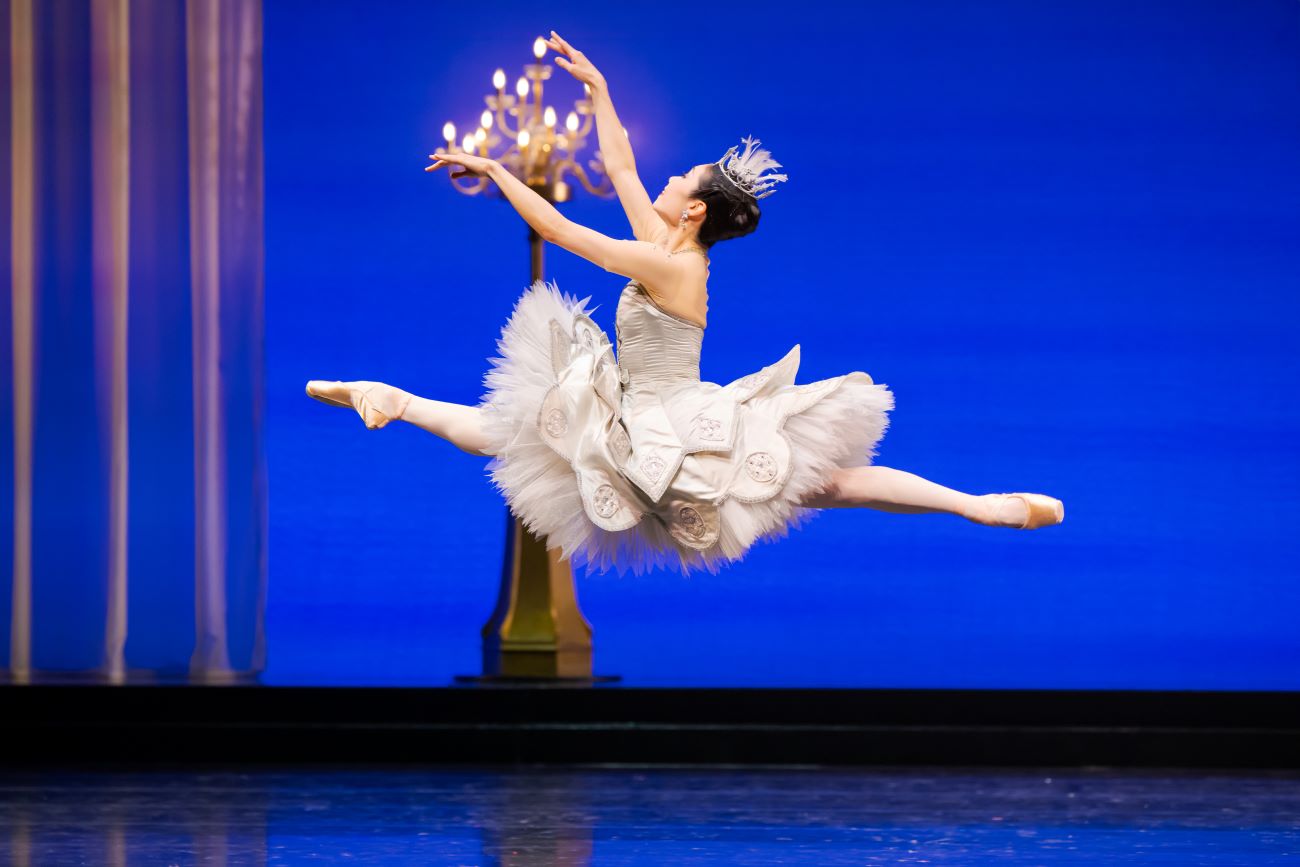
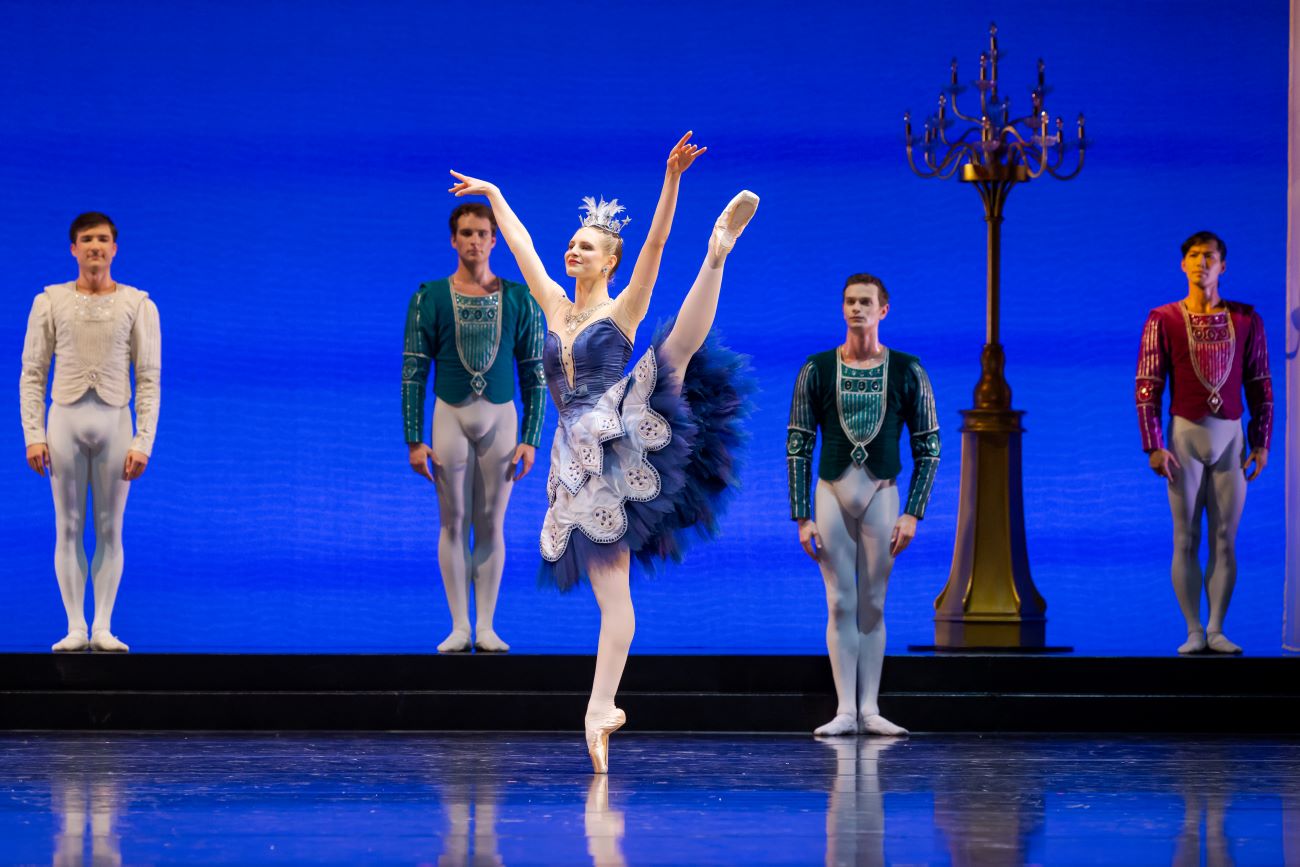
Guest Repetiteurs, Laura Morera and Mark Kay appear to have chosen the dancers to mirror the traits of the original cast who were all stellar dancers of the Royal Ballet at that time, including New Zealand’s own Rowena Jackson, Bryan Ashbridge and Alexander Grant, as well as Phillip Chatfield who later became Director of the New Zealand Ballet as it was known then. Ashbridge was also appointed Director of the company in 1970.
English critic, Mark Monahan describes Ashton as being a “master of seraphic grace” and the purity that this description implies, is inherent in Mayu Tanigaito’s solo and her later pas-de-deux with Laurynas Vėjalis, which she performs with a delicacy that illuminates the beautiful choreography. The other soloists execute the intricate footwork, the silken courus, the hops en-pointe and the lightning-quick changes of direction with a great deal of skill, making the tricky choreographic design look easy. The ensemble work of the seven couples is in perfect unison and the men’s mazurka provides a strong contrast with some impressive tours-en-l’air by Vėjalis.
The sumptuous costumes of Birthday Offering that speak of a bygone era, were designed for the Australian Ballet by Kenneth Rowell, recreating the bell-shaped tutus of the original, in colours of silver, magenta, red, blue, turquoise, purple and green. The elaborate headpieces were created by Victoria Grindley.
The second work on the programme, Ultra Folly by RNZB Choreographer-in Residence, Sarah Foster-Sproull was recently performed at Linbury Theatre in London as part of the International Draft Works season, convened by the Royal Ballet. It is an exploration of an ancient musical theme La Folia, consisting of recurring chord progressions and melody, which has often been used by composers through the ages, in their own works.
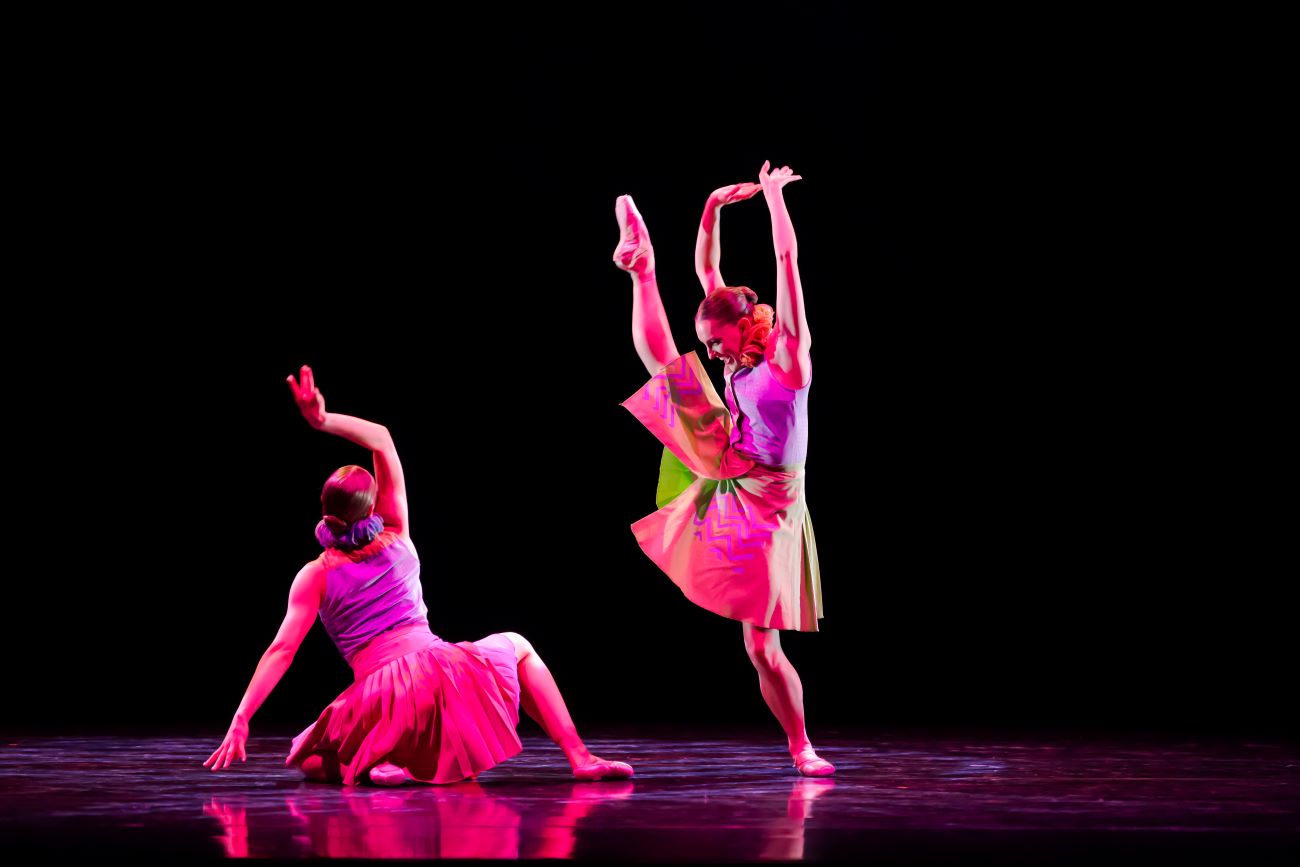
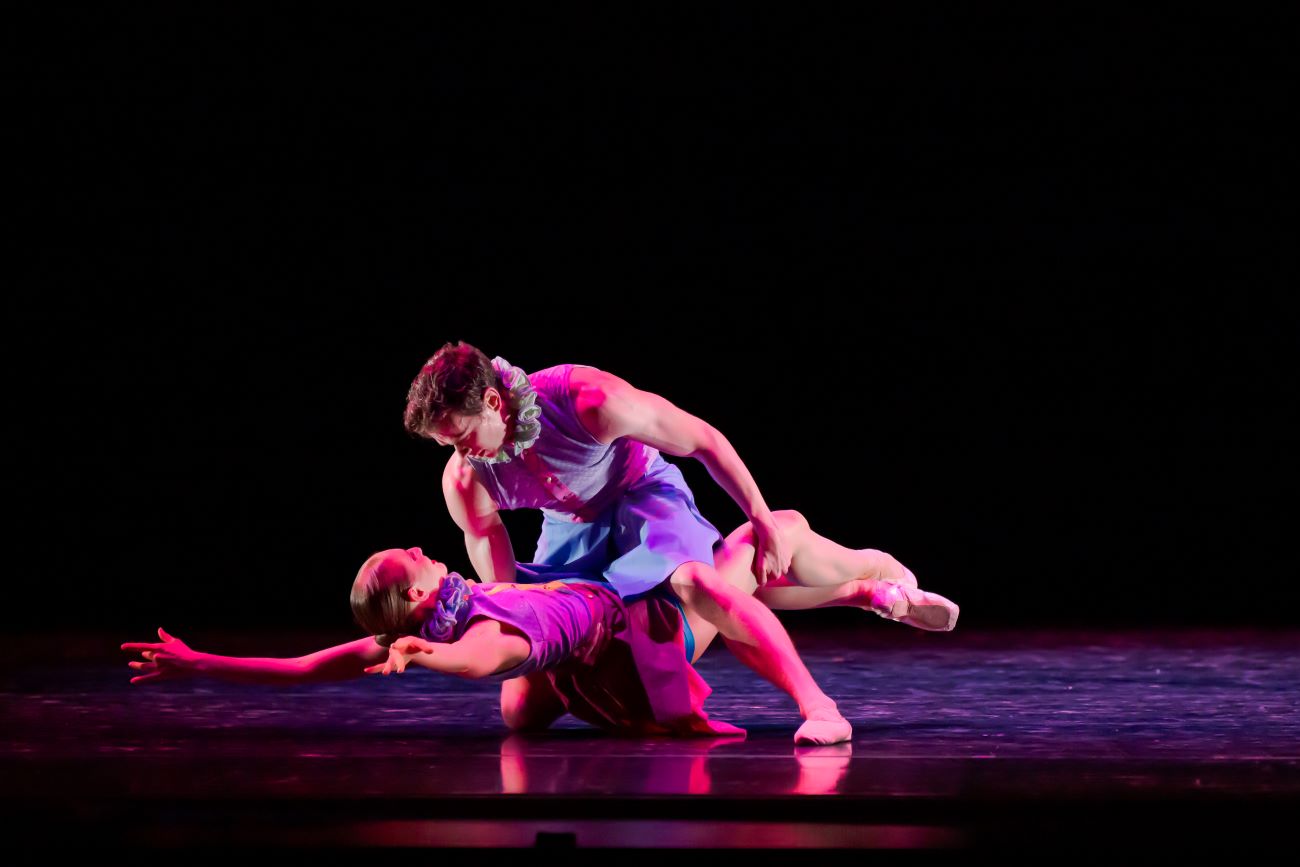
Ultra Folly opens in complete silence which has the effect of setting the pace and accentuating the rhythmic cadence and musicality of the choreography. Four dancers are clad in bright-coloured costumes designed by Donna Jefferis, consisting of neck ruffs (as in commedia dell'arte) and tops and skirts. They romp through a series of interactions or near-connections, to the “folly”-type music of Antonio de Cabezon, “Anonymous” and Andrea Falconieri. The amusing opening stance of the four dancers standing front-on and not-quite-touching each other, is repeated several times, as is their feigned distaste at actually touching.
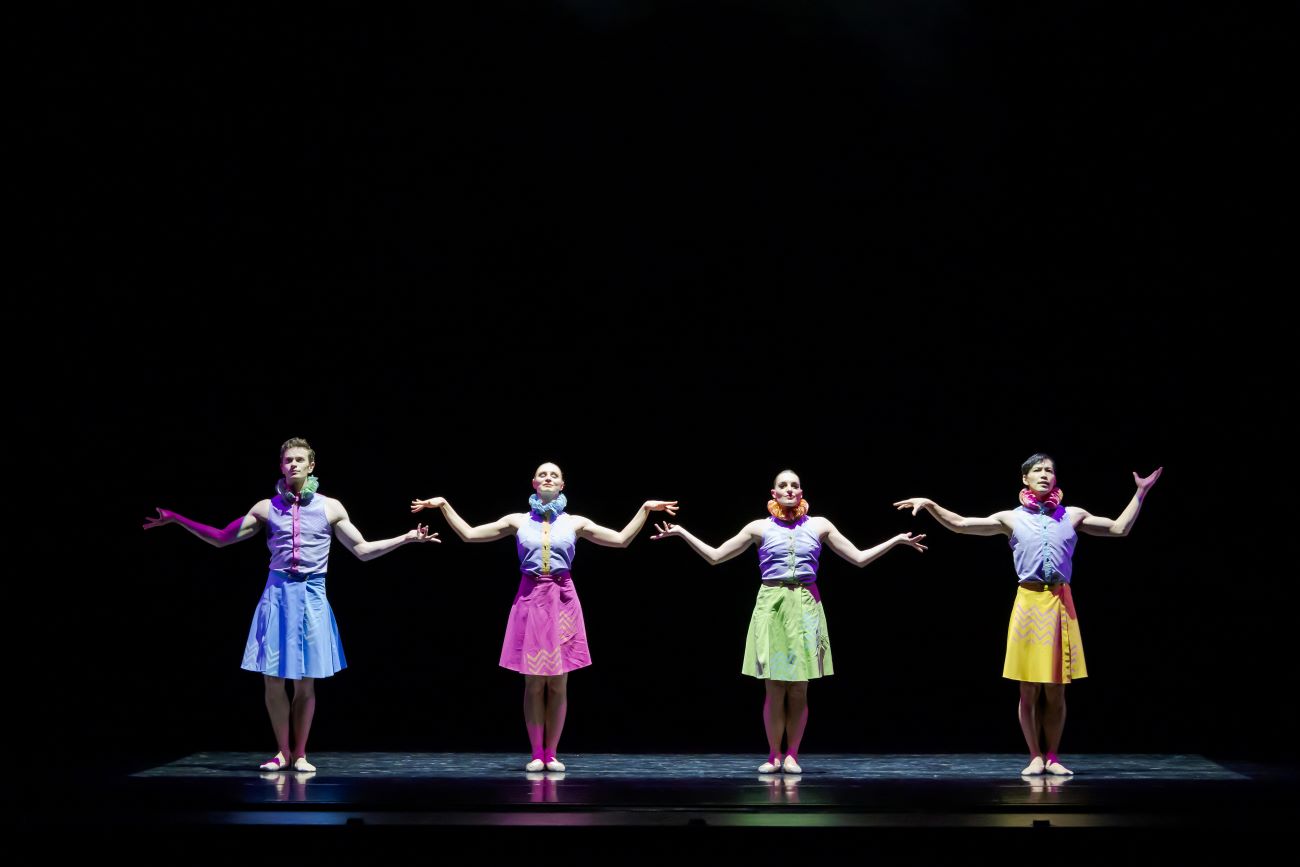
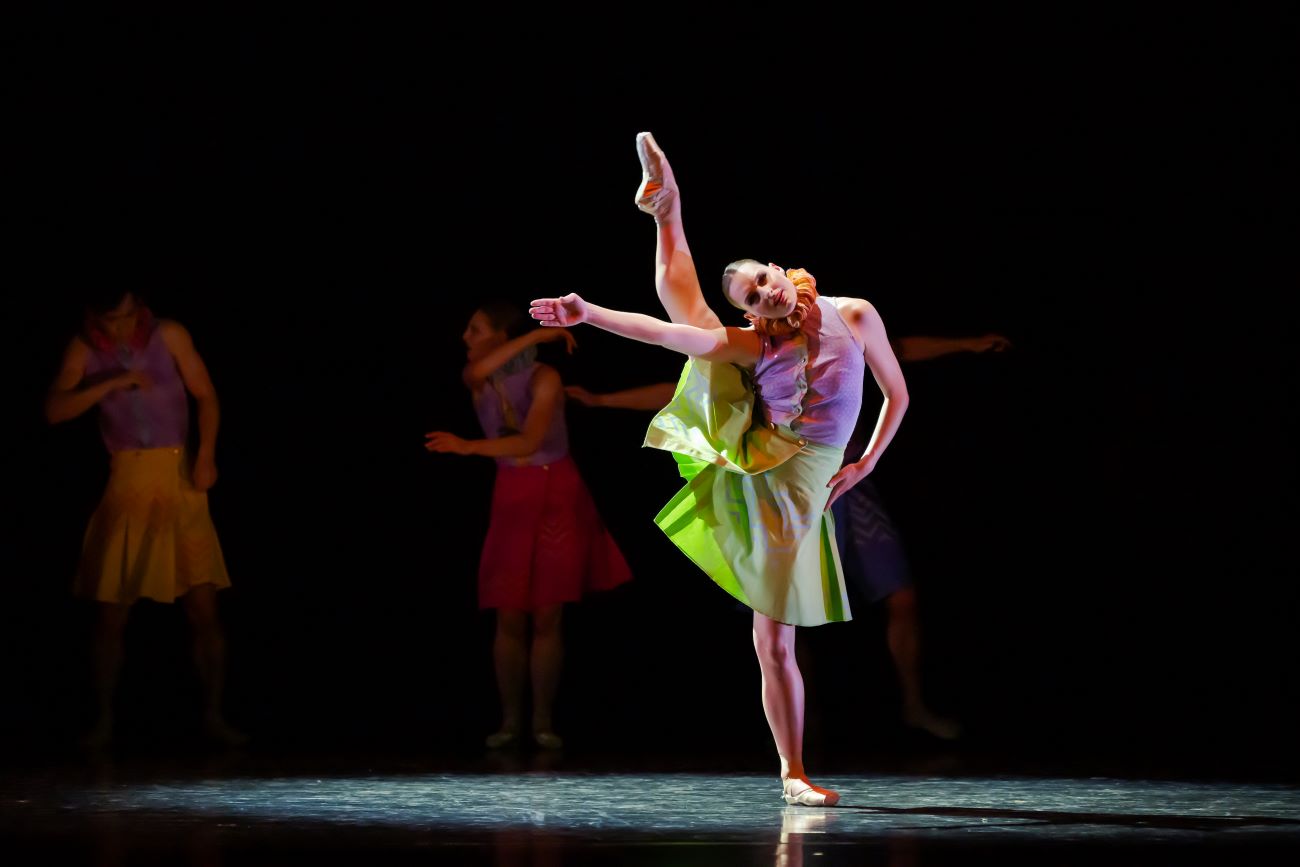
Ana Gallardo Lobaina and Joshua Guillemot- Rodgerson are stand-out performers in this work but all four dancers excel and imbue the work with understated wit. The partnering is accomplished and there are moments that reference the nuances of baroque dance. The lighting design by Daniel Wilson contributes greatly to the staging, with four angled spots melding into each other as a form of commentary on the dance.
Freelance choreographer, Andrea Schermoly’s lush, contemporary choreography concludes the evening in Stand to Reason performed by eight women. Led by a radiant Kirby Selchow who performs an energetic solo infused with passion, the work is a paean to the Suffragette Movement in New Zealand that procured the vote for women as a world-first.
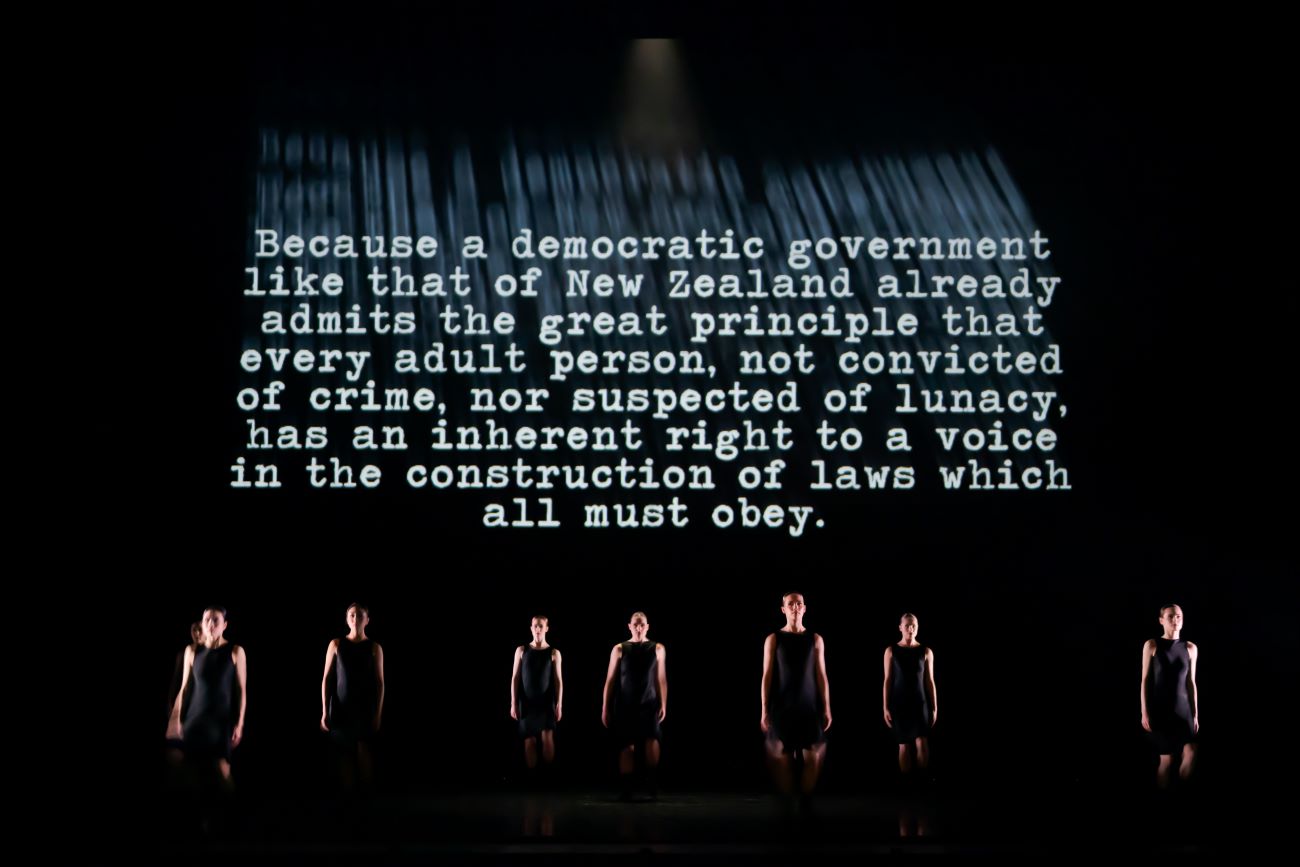
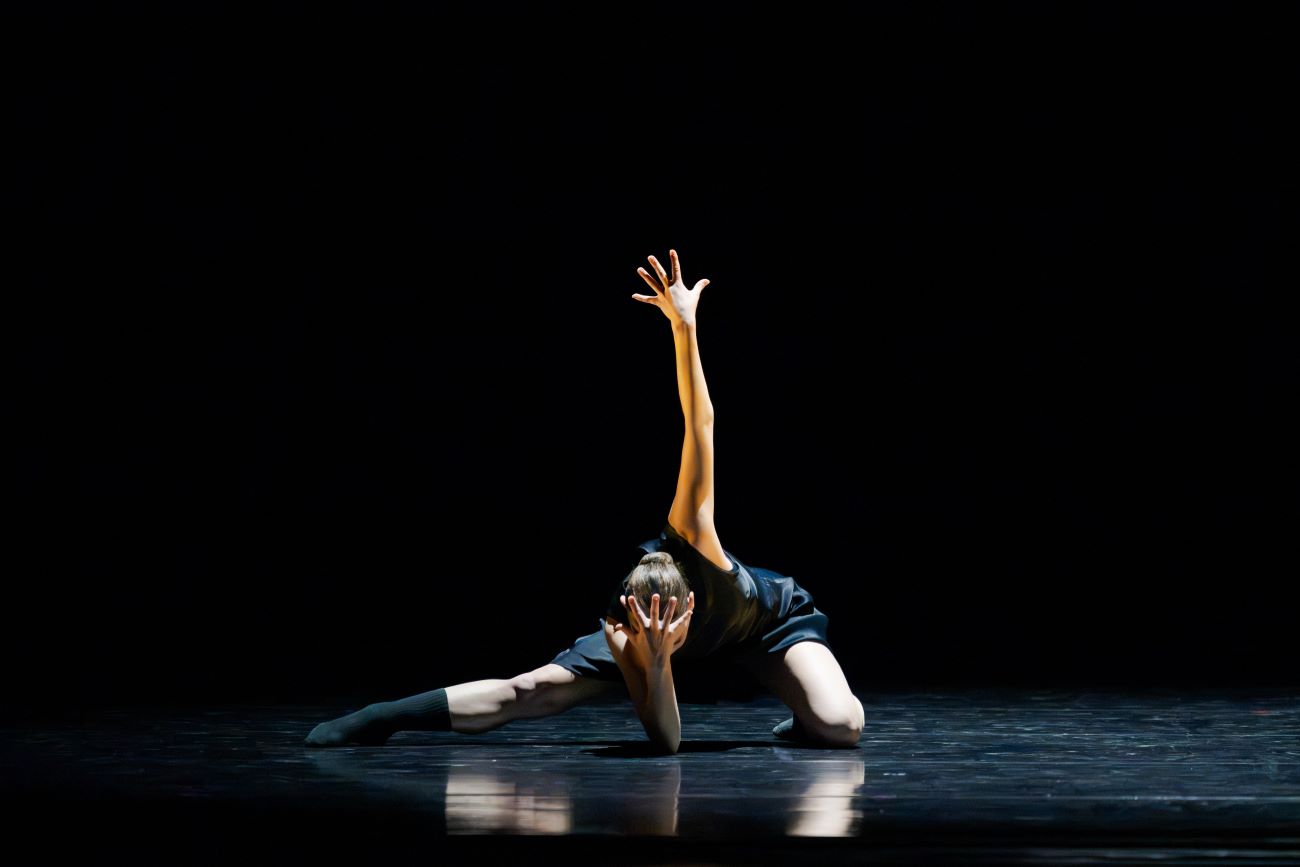
In a clever staging device, the words of an 1888, unintentionally amusing pamphlet, “Ten Reasons why a woman should vote”, are projected onto the back screen to the accompaniment of a clacking typewriter sound. The austere costumes of simple black shifts and black socks designed by Donna Jefferis, provide a pleasing contrast to the spirited dancing of the women that augments, as the work progresses. The dancers’ grounded placing and deft assurance in embodying the movement and patterning, is a joy to watch.
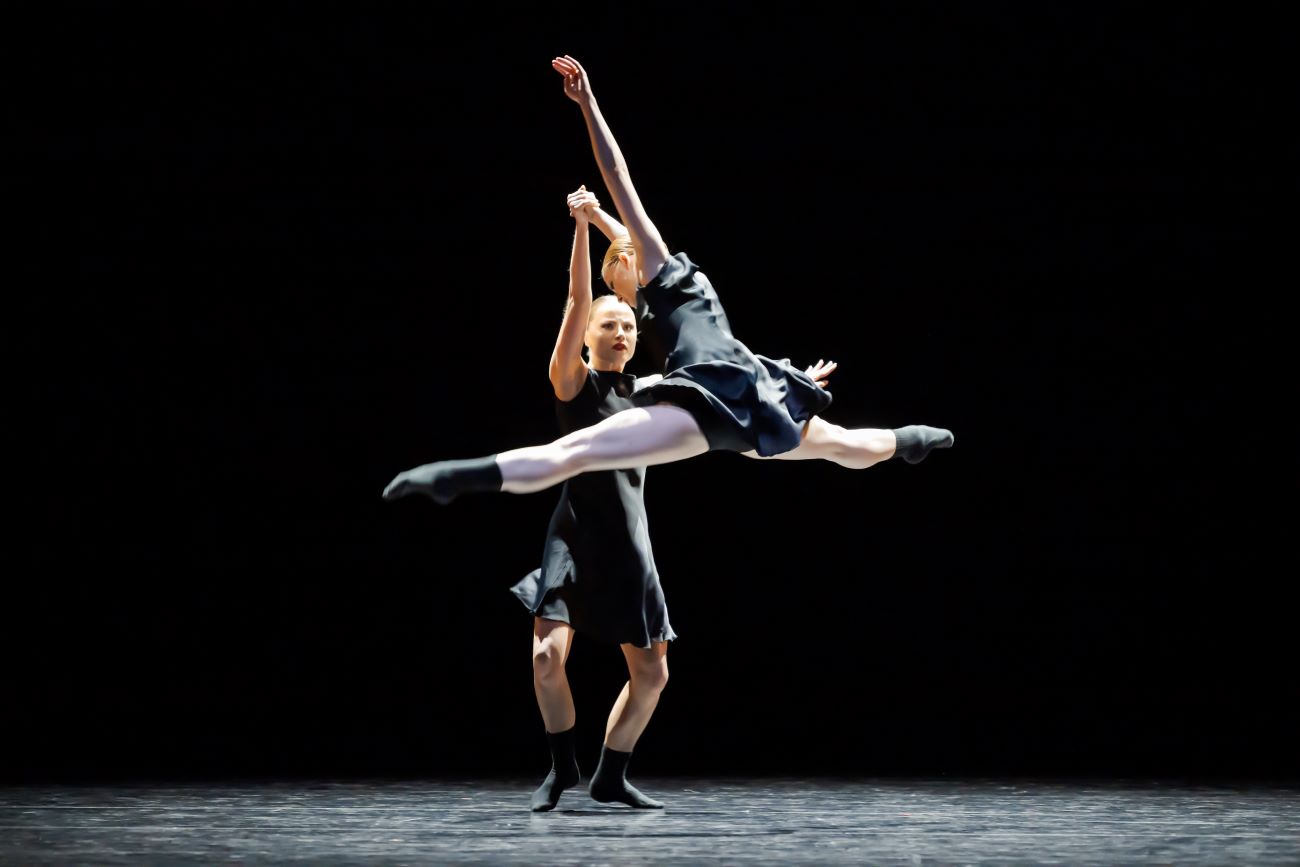
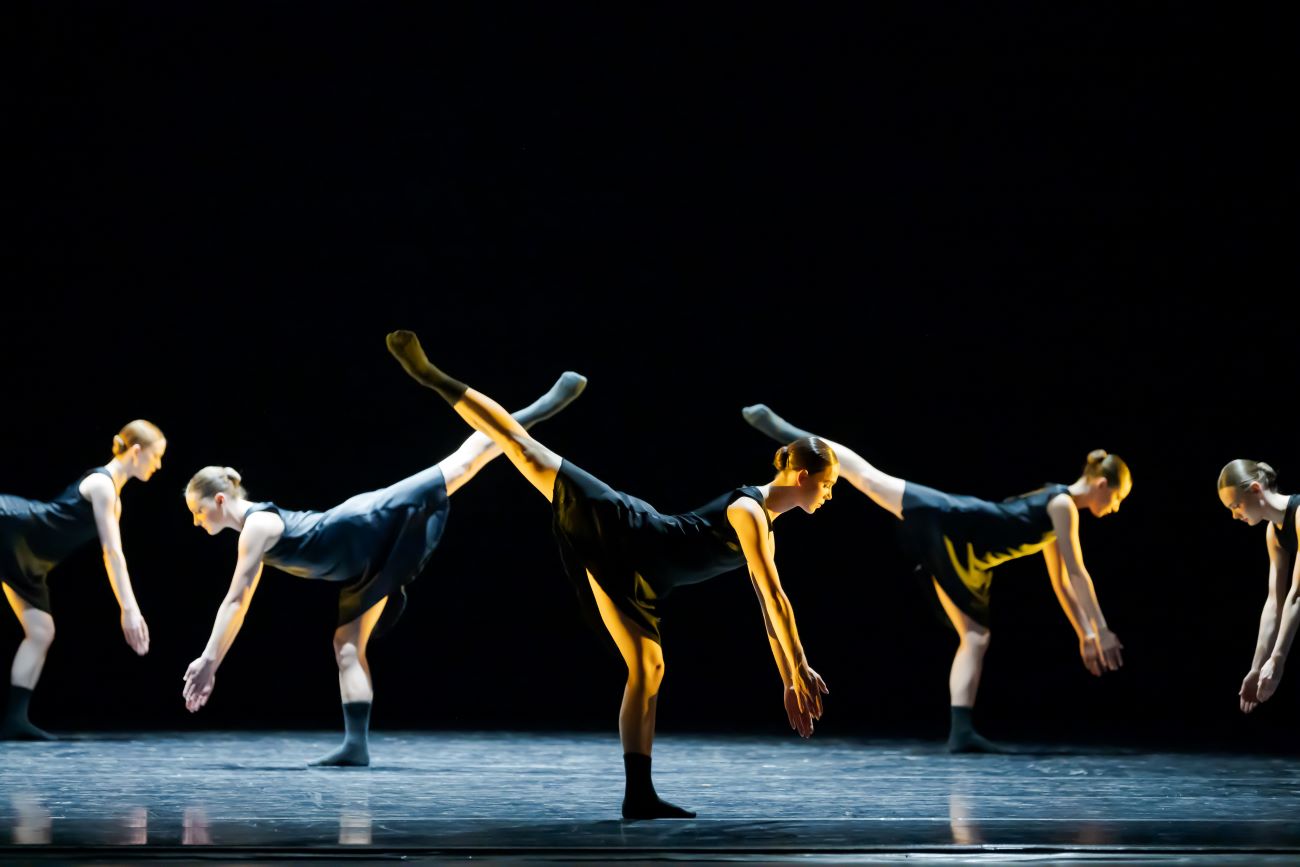
The message of Stand to Reason is sobering, as the projected text reminds us that there are still many countries that don’t permit women to vote. The music by Marin Marais and Johann Paul von Westhoff, concludes with the haunting Beethoven’s Sonata No 14 in C sharp minor “Moonlight”. It is redolent with the spirit of those brave women and the resolute stand that they took to achieve this victory in New Zealand so long ago.
This Winter Season is a testament to how accomplished the Royal New Zealand Ballet dancers are. I look forward to the day that they are as feted and celebrated as much as our sporting heroes are, in this country.
Gallery photos by Stephen A'Court
Gallery is loading. Please wait. Javascript will need to be enabled to view it.