

 DANZ
DANZThe Hannah, Wellington
2 July – MATA MATA – Harrison Cook
2 July – A PERSON SHAPED THING – Trinity Maydon
4 July – FEVER | DREAM – Ballet Collective Aotearoa
Reviewed by Mona Williams
MATA MATA
Choreographer/Performer: Harrison Cook
Composer/Sound Designer: W. Sze Tsang
Lighting Designer: Matthew Erren; Restaged by Tony Black
Costume Designer: Tia Tokić (BOSA)
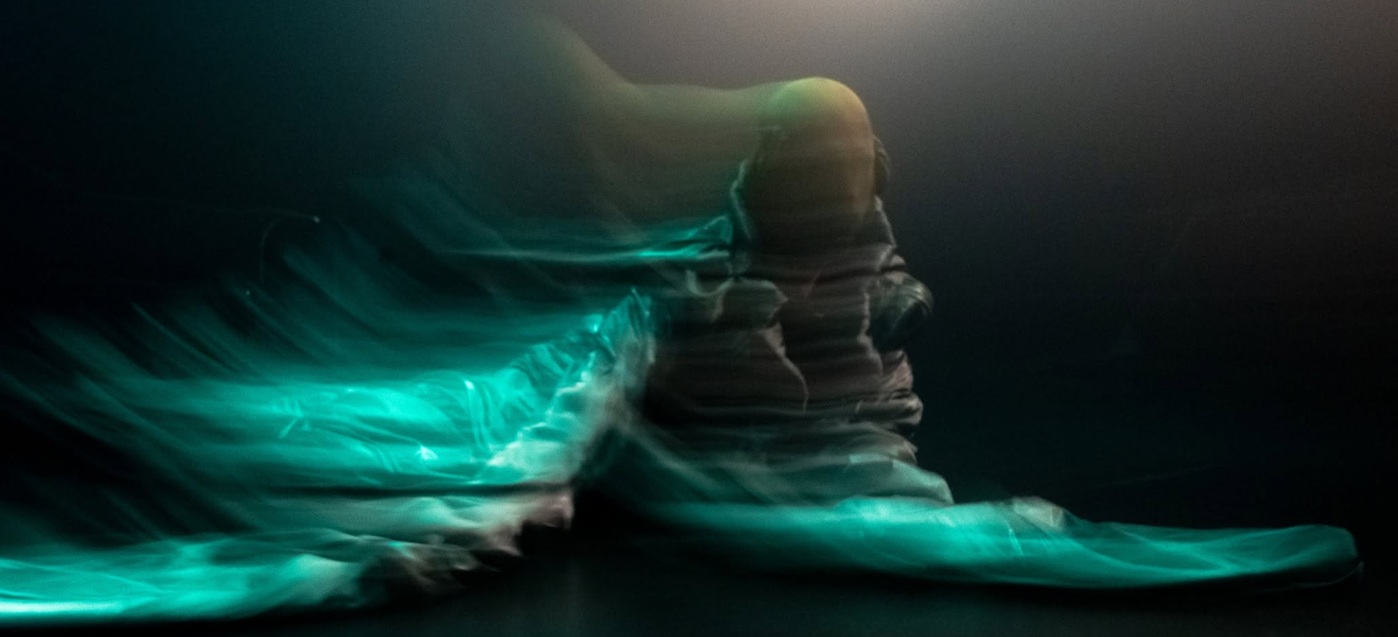
This heart-felt solo performance of Harrison Cook, who is Kai Tahu, takes viewers along his journey of exploration. Buried within the dancer’s psyche are ancient treasures of memories, stories, sounds, rhythms, movements, smells, sights and spirits of his ancestors. Uncovering it all requires humility, creativity, insight, effort and unwavering trust in the work.
In an atmosphere evocative of mist, to the sound of a whirring indigenous instrument a figure crawls forward onto a bare stage. A single spotlight captures the nonhuman figure draped in green with elongated sleeves and a face entirely wrapped in green net. This other-worldly figure represents the taniwha emerging from the depths towards the light. The taniwha’s floor locomotion, leg extensions, heaving body, response to birdsong and dramatic use of the sleeves prompts questions of the mythical world, the ancient spirits and the taniwha’s embodiment of the natural world.
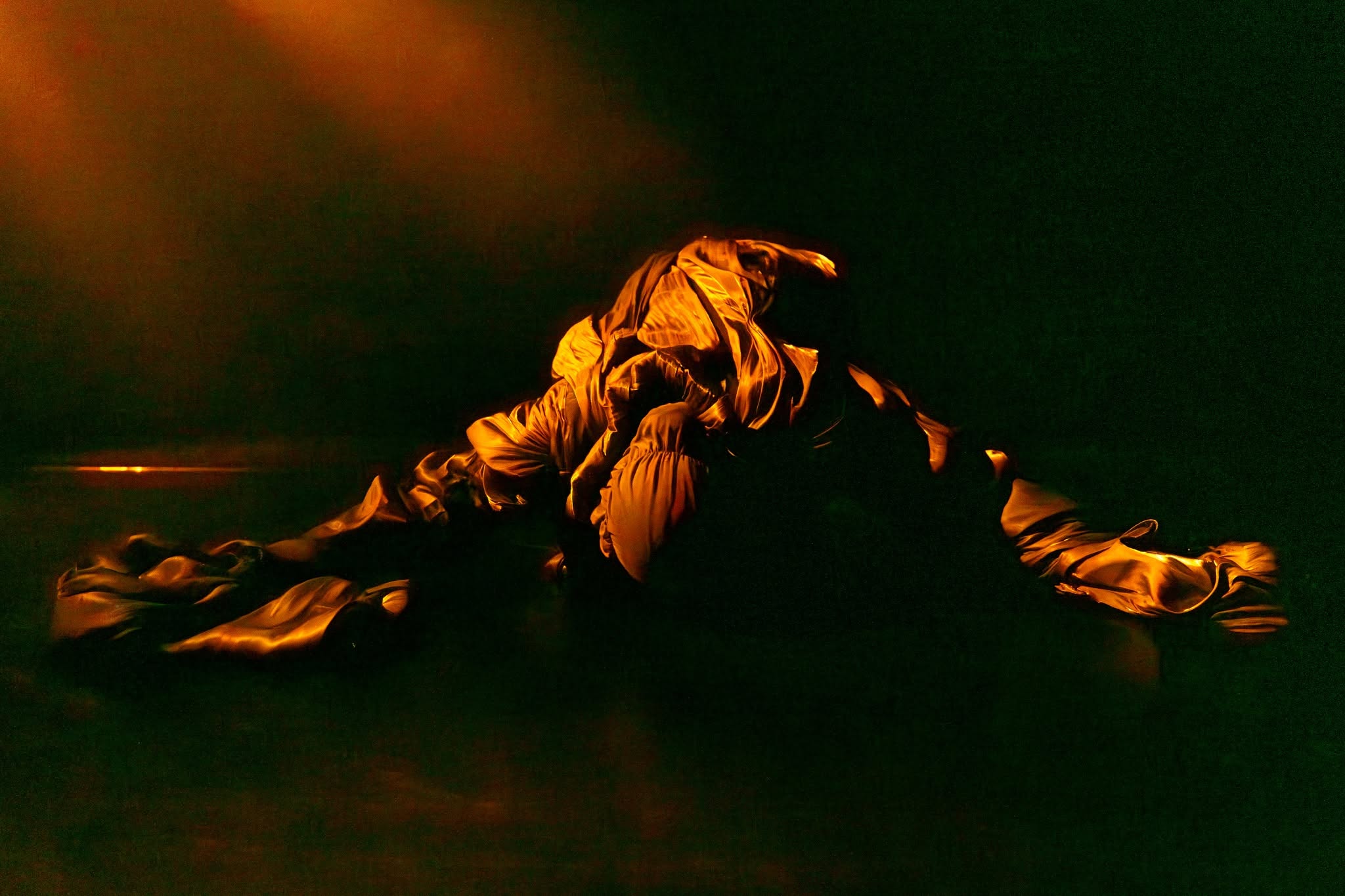
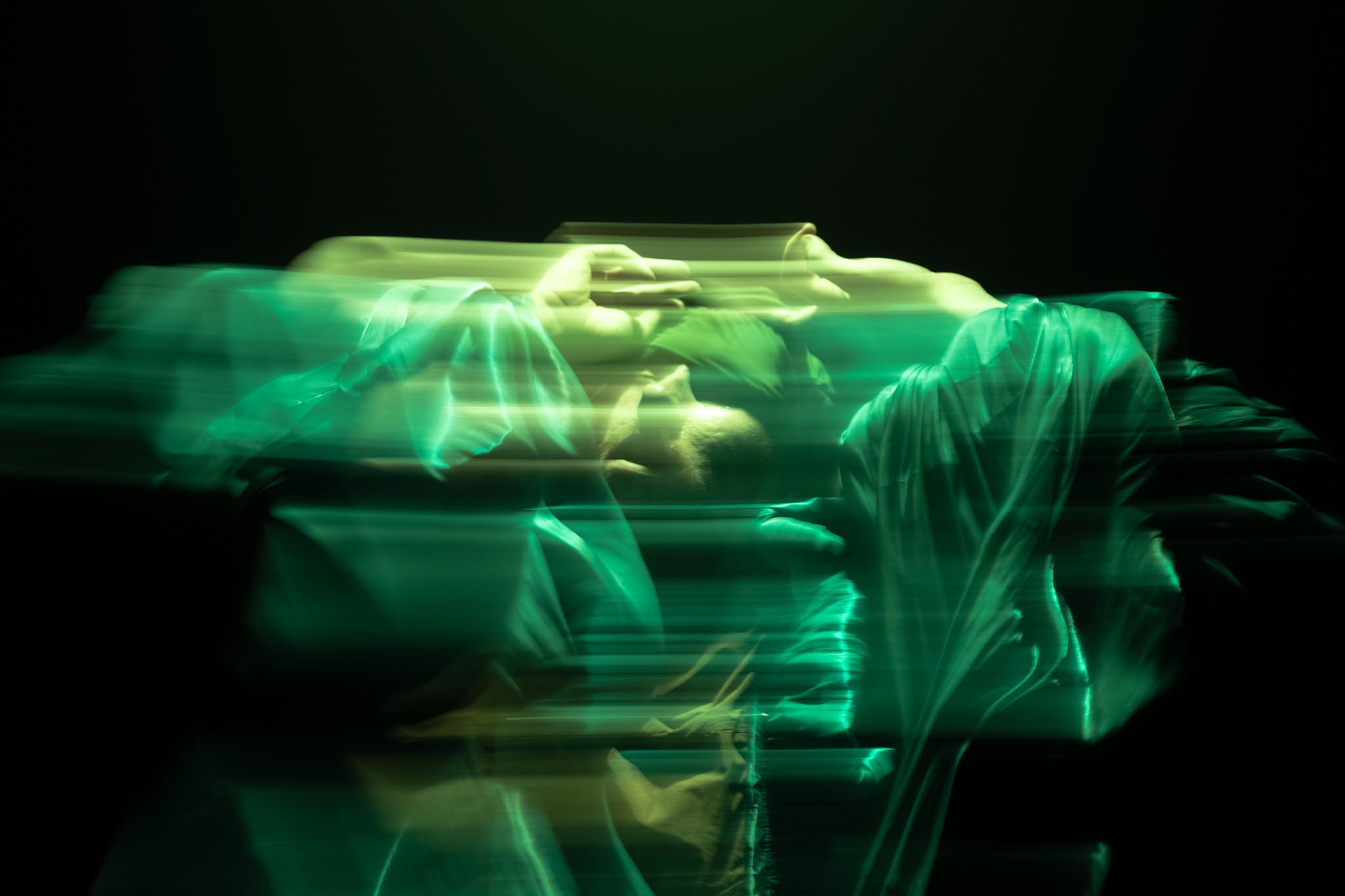
MATA MATA by Harrison Cook. Photos: Logan Ringshaw | Kilter Vision
Becoming a human and whipping the fabric in circles around his body, the dancer emerges, and removes the face net to reveal a tall, stately man of sculpted features and traditional hair grooming. He poses in arrested visual sculptures, interpreting a soundscape of voice tonalities, howling wind, waves lapping the shore, beaten sticks, the trilling music of the Māori nose flute and muffled sounds suggestive of an echo chamber.
The integrity of the work is grounded in the use of natural movements. Harrison resists employing Western, balletic dance vocabulary. He traverses the stage in large circular and linear floor patterns, presents asymmetrical moves when he ‘falls’ against the wall and uses his height to theatrical effect. The light changes from green of the watery world to red; that suggests formation of a human in the womb. Harrison sweeps into bold arm designs against the rhythms of the drums and amplifies the significance of his movements when he responds to statements in Te Reo. His wide circles traversing the stage reflect the voyaging across the Pacific Ocean by Māori master mariners, his tipuna. His sharp geometric arm poses reference the chiselled shapes of pounamu, the treasure of Kai Tahu. Voice-overs in Te Reo are reminders of Kai Tahu’s masterful oratory, their skilful negotiation with the Crown for the return of their land.
My single wish is for greater mobility in some passages; some are static for moments too long. All the same Harrison achieves full humanity, having evolved from the world of the taniwha, his tipuna, to the world of present-day humans. It is a journey worth sharing with us.
A PERSON SHAPED THING
Choreographer/Performer: Trinity Maydon
Costume Design: Anna Hazelton Jones
Music Design: Jakob Elijaš
Lighting Design: Tom Smith
AV Projection Design: Emile Commarieu
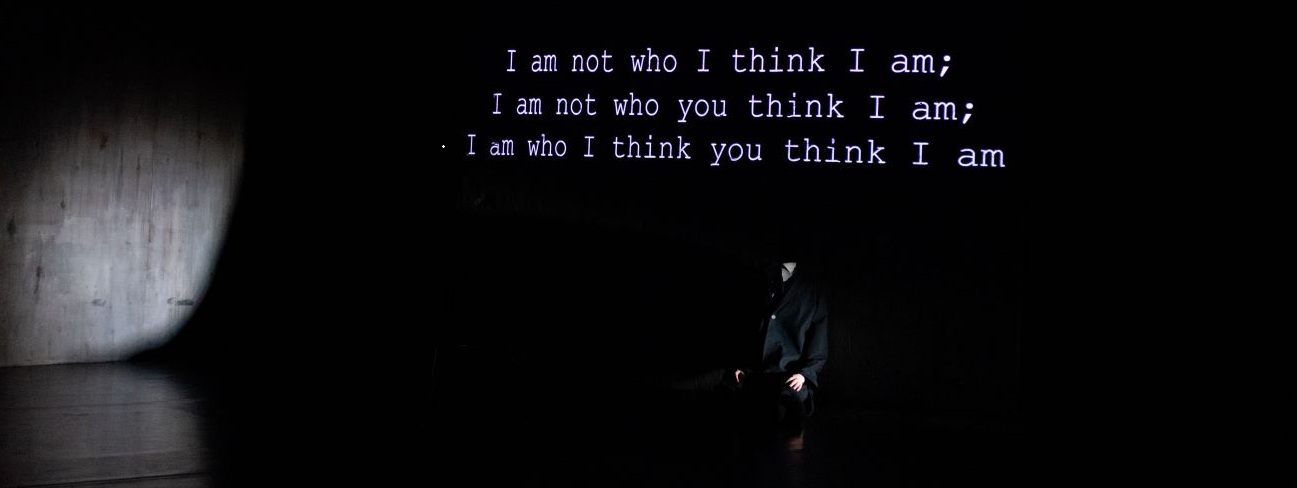
Enter the theatre. Already seated on an otherwise bare stage is a headless figure. Lit centre-stage by a single spotlight the mystery-figure sits on a chair. The figure wears a man’s well pressed dark suit, paired with a white shirt and tie. Judging from the attire, is this a male figure? Does it matter? Is the figure alive? Why is the figure headless? Where is its head? How did it come to be headless? Why is the figure bare footed? Are the still pink hands real or wax? Is the figure tall? Pakeha or..? Exactly who is this figure? Much is revealed but much more is concealed. Why do I hear sounds of shattering glass, wood slapped together and industrial noises? The conceal-and-reveal contradictions begin for tonight’s tantalising dance exploration!
Trinity Maydon’s solo performance explores the themes of identity, self-presentation and the fragile nature of self-perception. The sole dancer, choreographer and concept creator of this hour-long work, she possesses a wealth of knowledge about herself, to amplify or to shield traits. Her assured contemporary technique affords her a breadth of physical movements to ‘conceal and reveal’ impressions. Long a favourite exploration in Fine Art, this conundrum of ‘show but hide’ is reminiscent of the daring black silk-and-feathers creations of the late, Parisian fashion designer, Yves St. Laurent. “Focus on, but do not reveal the breasts.”
Trinity’s sophisticated dance styles capture pathos and exuberance; depression and extravagant swirling in gleeful joy. At times she struggles forward on the floor, at others she rests her forehead on the wall in a subtly erotic pose that is cheered by the rainbow ladies in the front row. Her eloquent hands and arms sculpt shapes, at times behind her back. They speak of peace or of aggression, moving with the percussive beat of the music or playing against it. Dancing with balletic fluidity in a sequence, she turns swiftly, jumps with carefree ballon, then abruptly stops. A disjointed, jerky, robotic dance sequence follows which showcases her command of this style. A static stance, arm-shapes of disturbing angularity, her head snaps, shoulders jerk. Facing the back wall, she strips her top; her hands convey motions of menace. Then she executes smooth, rolling floor work, done to disjointed crowd noises.
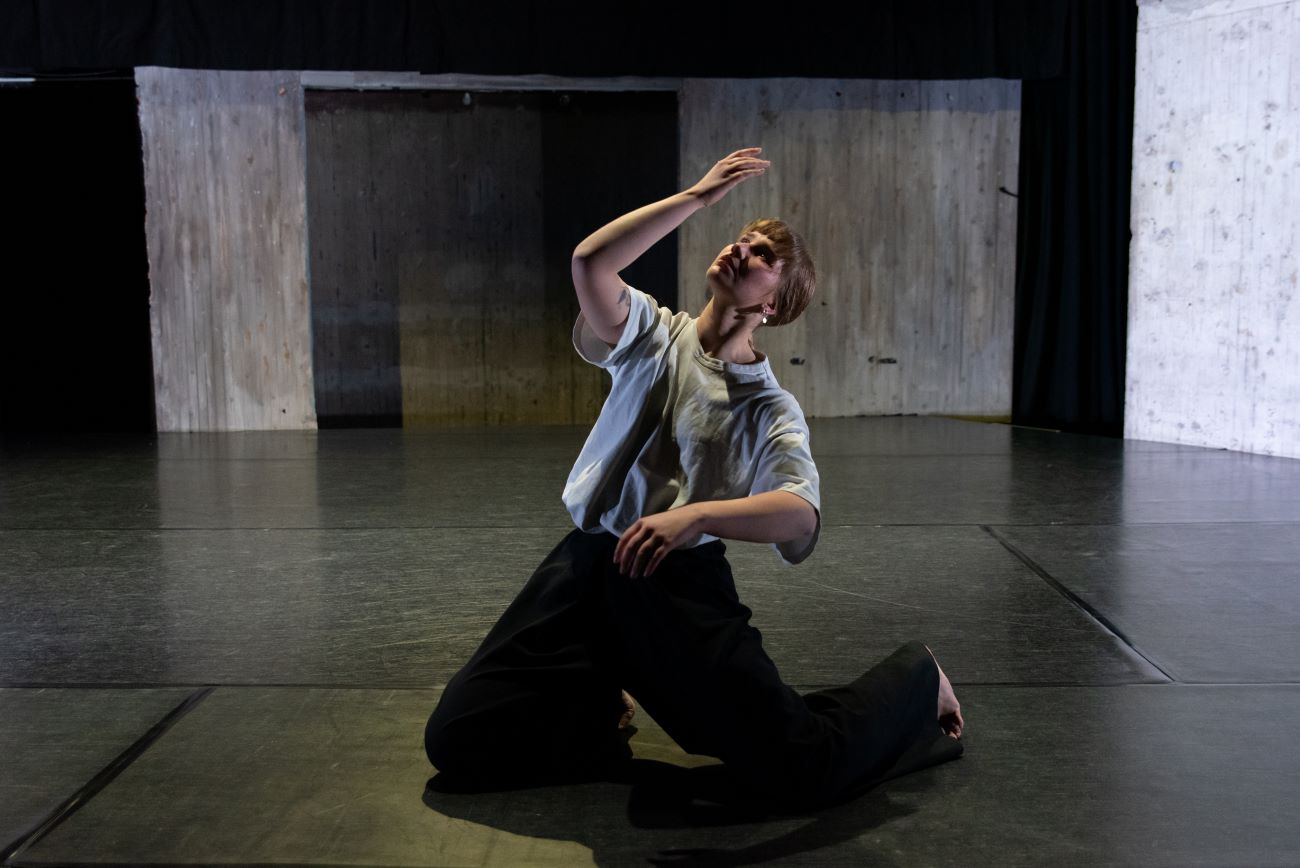
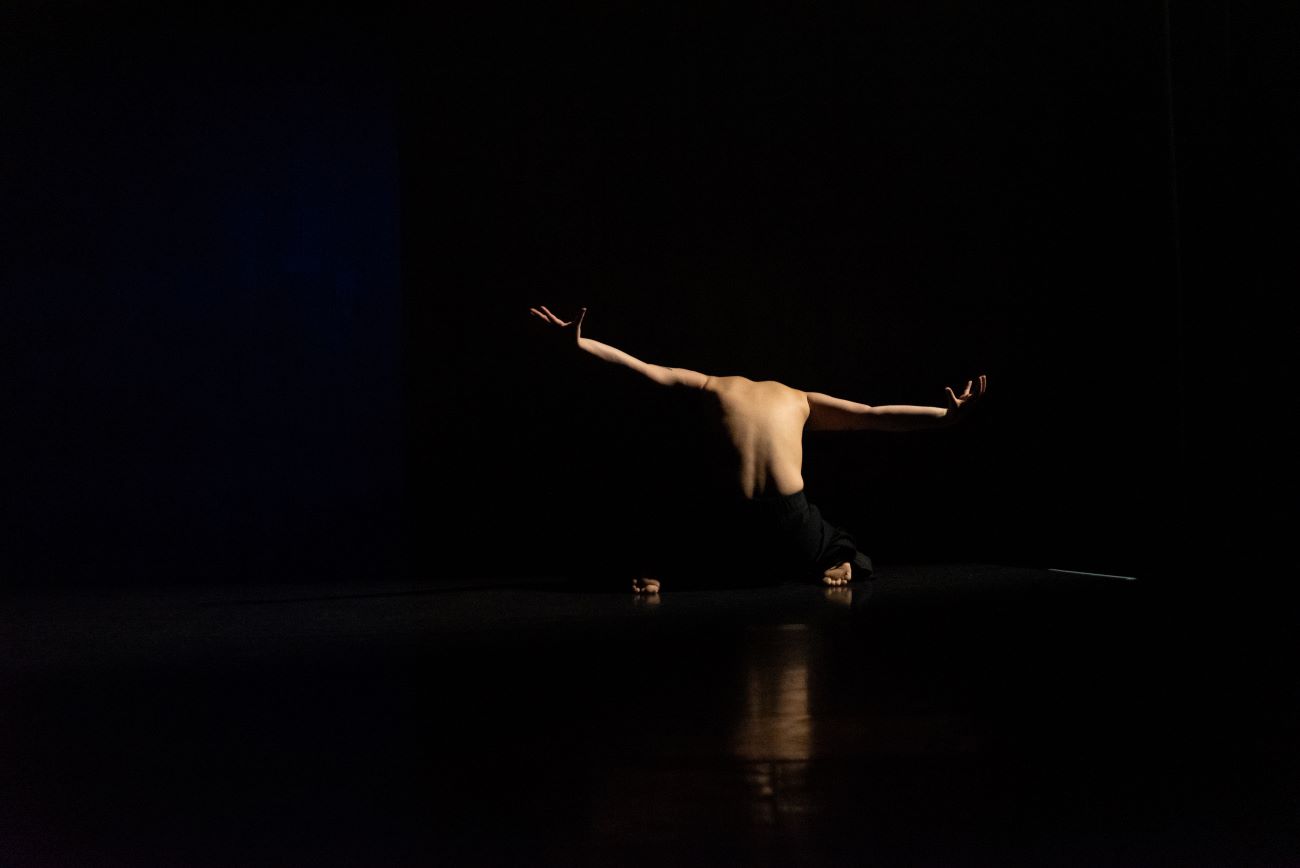
“A Person Shaped Thing” by Trinity Maydon. Photos: James Burchell
She speaks, but a hand cups and silences her mouth. Appraising her features, her right hand distorts her mouth and cheek. Why? Reaching out, to jazz rhythms, her casual chat to the audience begins coherently. The visual geometric patterns projected on a wall at first complement her contemporary extensions and runs. When the projected patterns show up at warp speed, her verbal pronouncements become ramblings. The stage darkens; her movements constrict to pacing across the stage. The audience is faced with a manic personality, expressed in a breathless, crescendo of incoherent babbling.
This fitting performance, a mirror of the sunshine and darkness of the human mind does not tell ‘all’. It shows the complexity of humanity and ends with the dancer acknowledging her layers of ‘self’, walking off the stage and through the door.
FEVER | DREAM
Choreographers: Lynden Foley, Hannah Haril, Olivia Duncan, Turid Revfeim, Zoe White
Performers: Anna Hosking, Aylin Atalay, James Burchell, Josh Linkhorn, Ruby Clarke, Ashley Lim, Nicola Sutherland-Smith and Izzy Hoult, Emma-Rose Barrowclough, Amelia Chandulal-Mackay, Zoe White; Jefferson Chen.
Sound Design: Lucy Summerfield, Kit Reilly, Jefferson Chen
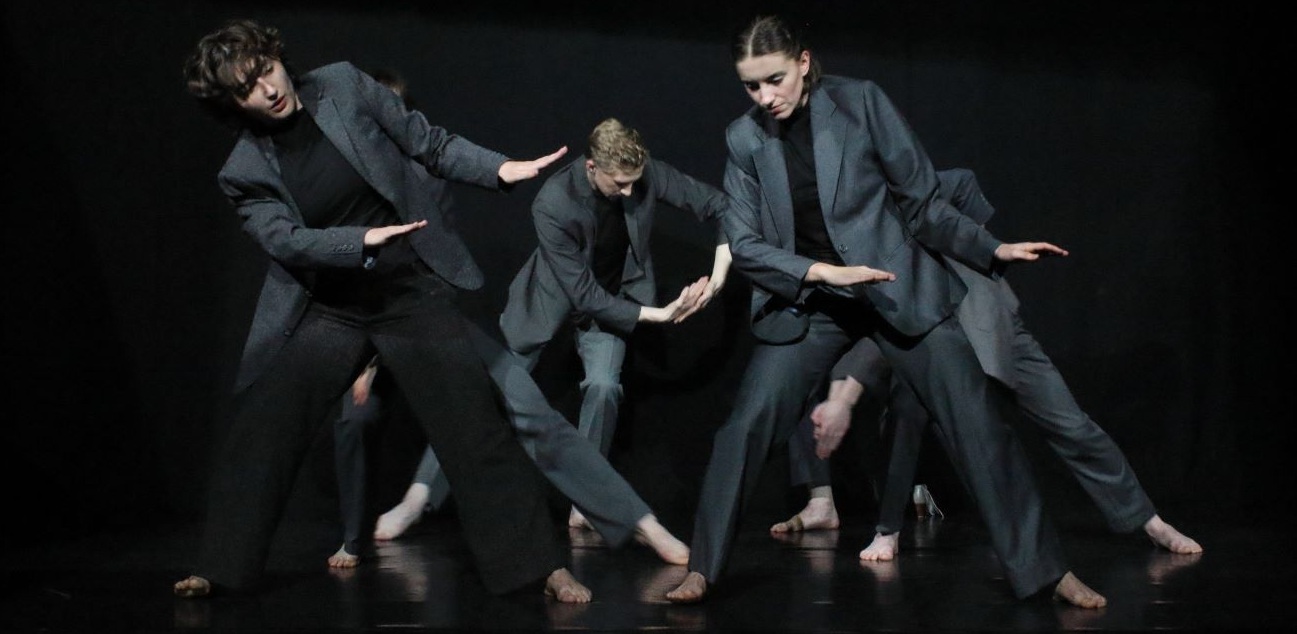
FEVER
The opening performance by six dancers maintained a particularly brisk tempo designed to lay bare the practices which lead to physical burn-out. The high standard of technical attainment demanded and the not-so-subtle sense of competition among the dancers reflect normal Ballet Company life. Lyndon Foley’s choreography delights the eyes with ever changing combinations of 2, 3, 4, and 6 dancers and swift directional changes on a compact stage. Picture perfect, seemingly effortless in lifts, turns, runs and jetés the ensemble displayed a high standard of training. Moments when the males appear almost to be executing a military-drill, these force the audience to ask about retaining the joy of performance; and the happiness within the corps at the end of a season. The pursuit of excellence is precisely what makes this Dance a delight to watch. That demand however, carries within it the seeds of competition and harm. Dancers beware! The soundscape is captivating. I thoroughly enjoyed this opening dance all the same.
FEVER TO DREAM
Four females are videoed frolicking in the Lady Norwood Rose Gardens of Wellington’s Botanic Gardens. The videographers selected performance space amongst some of the 300 varieties of roses and the central fountain. They capture the dancers responding playfully to formal horticultural arrangements. Other places videoed were the beaches and seascapes around Wellington. The dancers were effervescent and continued to project that feeling when dancing in urban landscapes. Combined with Kit Reilly’s soundscape it was a very enjoyable message of the beauty of Dance within one’s environs. The addition of overlaid vocabulary did not improve the experience for me; loser, hater, hates, pates. The audience reacted positively overall, however, so the members of this collaborative production can take a bow. It was enjoyed.
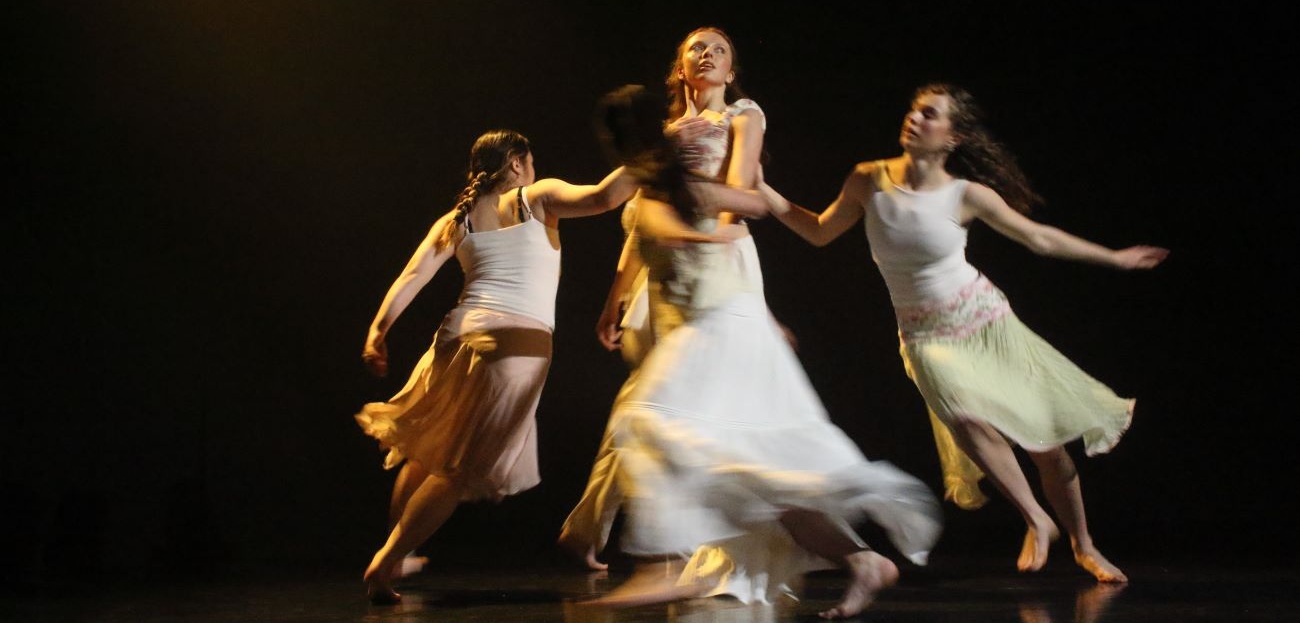
PATHS CROSS
Turid Revfeim’s stamp on this work imbues it with a commanding style, finesse and maturity of interpretation. Emma-Rose Barrowclough’s technical polish as she traverses the stage on the diagonal, at times on pointe, announces a dramatic beginning. The awareness of the unpredictability within life is met with a mature confidence; that one has the capacity to deal positively with the unexpected. The choreography is demanding but the spirit of execution is calmly confident and uplifting. The partnering is smooth and unhurried. Ensemble dancing, and individual moments for expression are presented with precision and verve. The music by percussion and synth, strings and flute is an inspired choice, that invites a wide vocabulary of contemporary movements and results in a lyrical, visually complex interpretation.
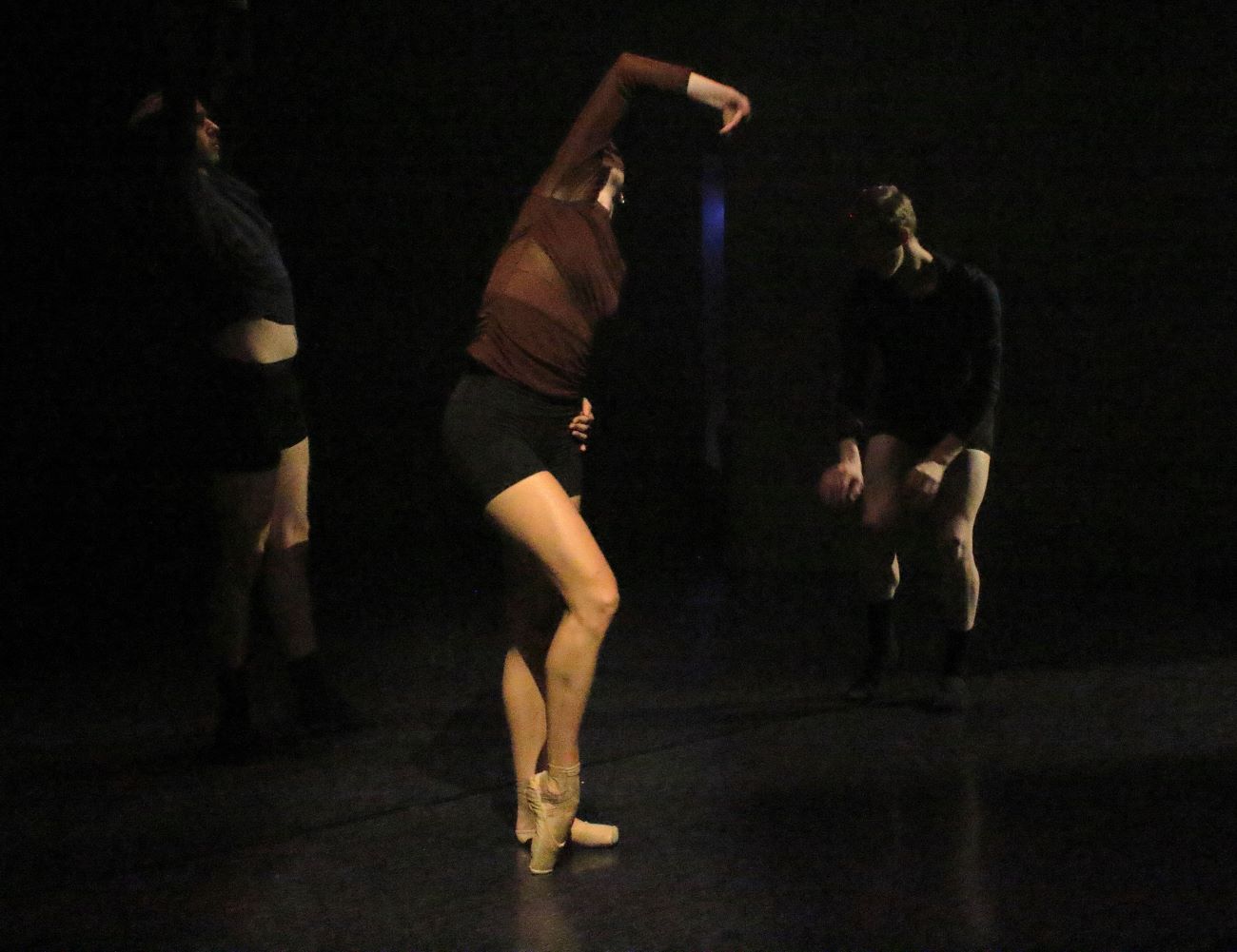
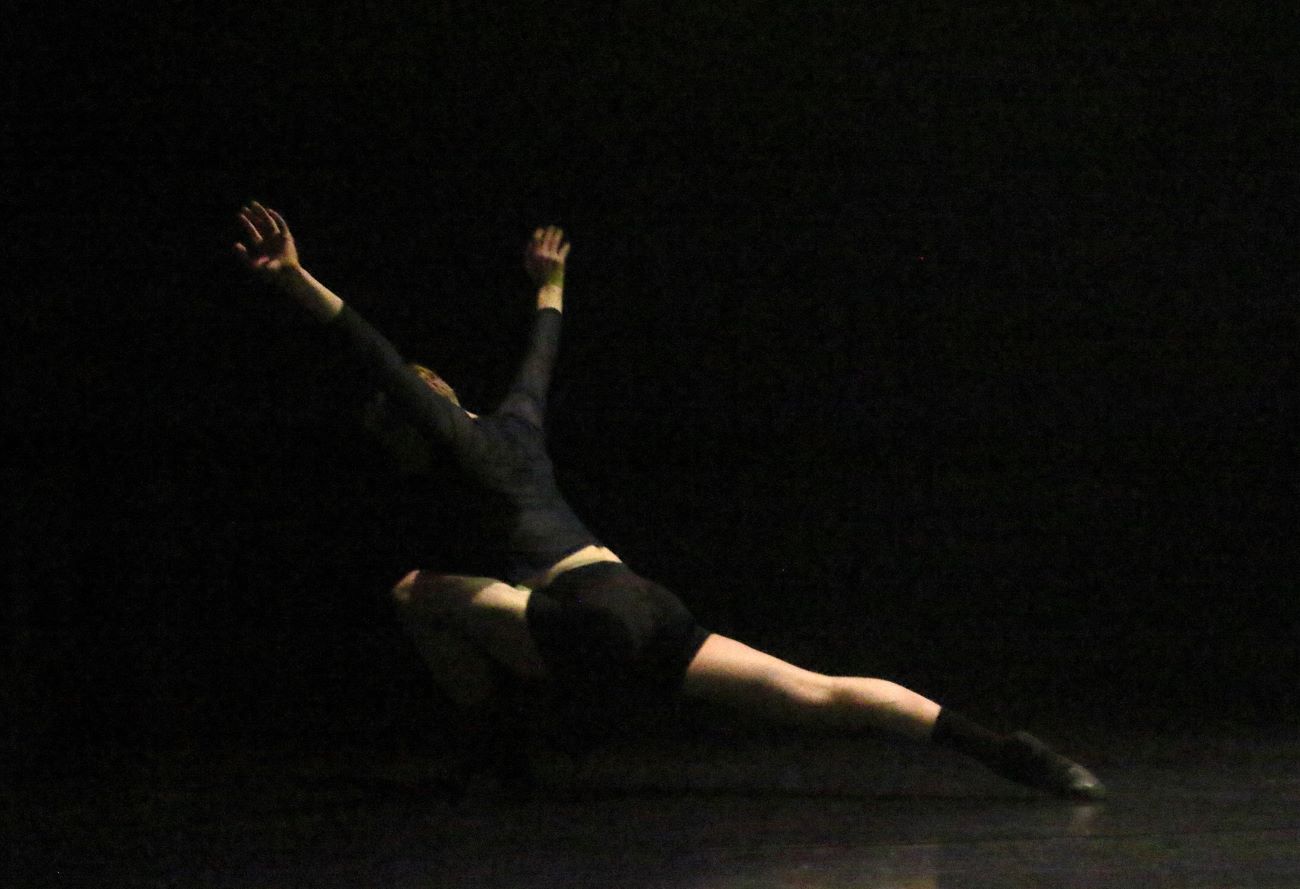
The overlay of wordplay works here; paths, baths and Batts danced next to a plastic bag of pink insulation won a chuckle of approval. The supple bodies of Amelia and Emma, their extensions, lifts and subtle epaulement made watching them a deeply satisfying experience.
The final two works offered Zoe White opportunities; to be a performer and then a Choreographer. First, dancing with Jefferson Chen who also was in charge of the music, was a study in pas de deux on the right track. The foundation is delightfully in place and promises a fully bloomed maturation. In the same spirit Zoe’s (D)rea(m)lity was a romp that sent us home buoyant. It had elan, clever spatial placements, a variety of mood responses to Jefferson Chen’s soundscape, visually stimulating formations and interplay that projects the seductive world of dreams and the delight of living with reality.
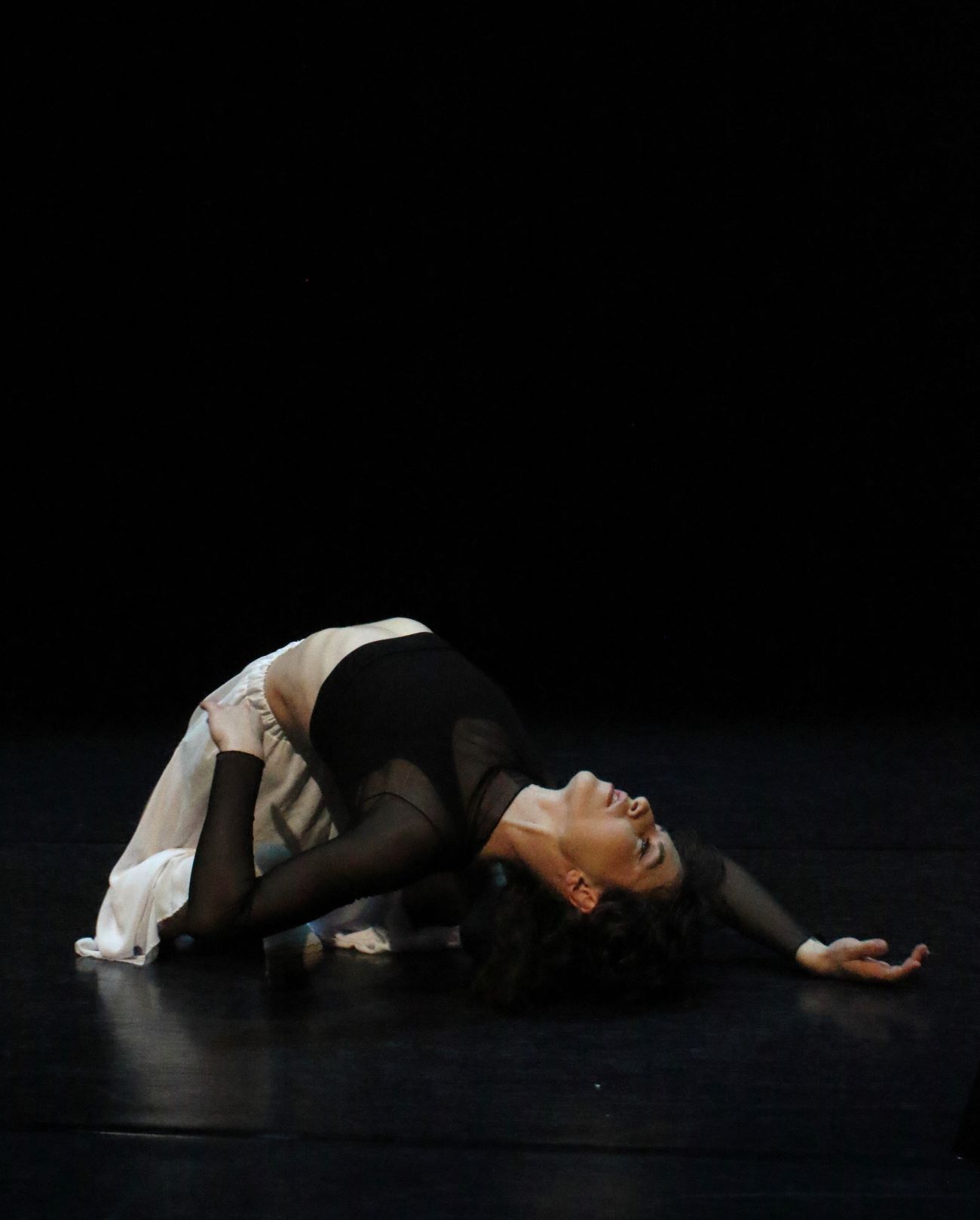
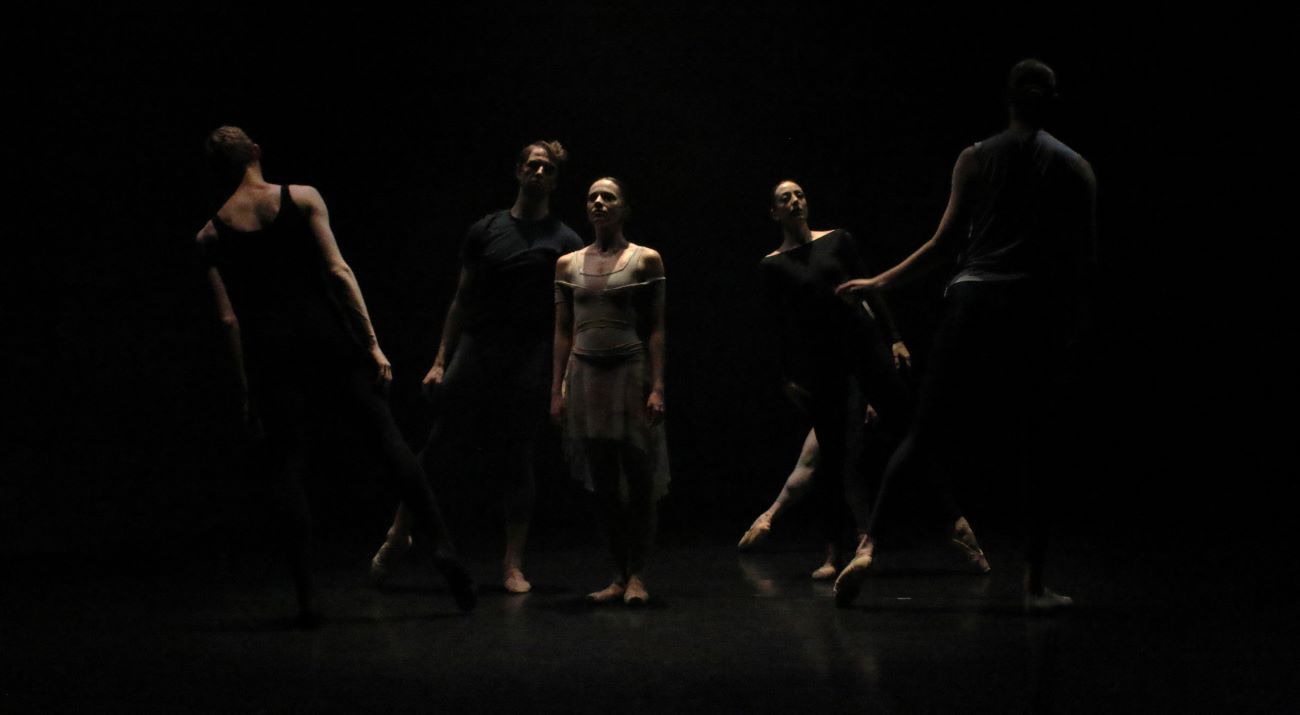
This programme had gems to be applauded. The standard of technical execution is to be congratulated. Funding a programme of this complexity is more than worth it. This display speaks of the hard road that disciplined members of the Collective tread to produce works of appreciable quality. Their dance communities, collaborators, generous donors, foundations, schools and trusts can be confident that their contributions propel Dance forward and upward. Long may The Poneke Festival of Contemporary Dance continue. Thank you too, Hannah.
Gallery is loading. Please wait. Javascript will need to be enabled to view it.