

 DANZ
DANZSt James Theatre
LAMENT
Choreographer: Moss Te Ururangi Patterson
Dancers: The New Zealand Dance Company
Music: Shayne P Carter
A MOVING PORTRAIT
Choreographer: Raewyn Hill
Dancers: Co3 Contemporary Dance Australia
Music: Arvo Pärt Tabula Rasa Ludus II. Silentium
GLORIA
Choreographer: Douglas Wright
Dancers: Co3 Contemporary Dance Australia & The New Zealand Dance Company
Music: Antonio Vivaldi Gloria in D Major RV589
Conductor: Dr Joseph Nolan
New Zealand Symphony Orchestra
Voices New Zealand
Reviewed by Brigitte Knight
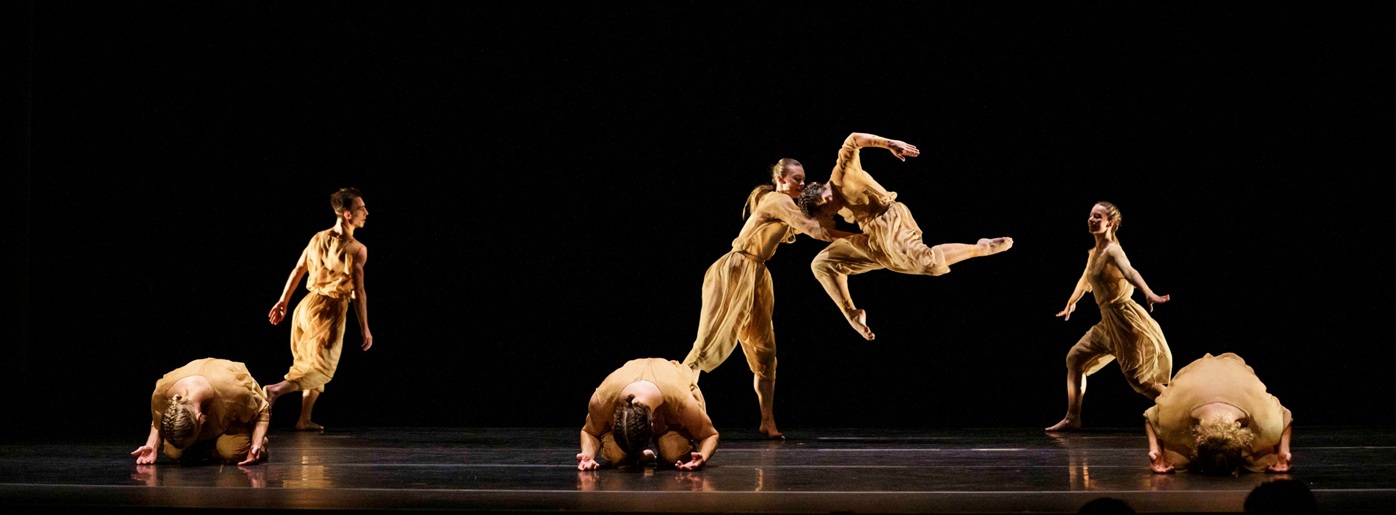
Billed as one of the headline acts for Aotearoa New Zealand Festival of the Arts 2026, Gloria – a Triple Bill, a trans-Tasman collaboration between the New Zealand Dance Company and Co3 Contemporary Dance Australia, is a cohesive, varied, and rewarding evening of contemporary dance.
Choreographer and Artistic Director of the New Zealand Dance Company Moss Te Ururangi Patterson’s (Ngāti Tūwharetoa) Lament opens the triple bill; a world premiere created for this programme on six NZDC dancers set to an original musical score by Shayne P Carter. The work draws together whakapapa, interconnectedness, inspired by the mōteatea E Pā Tō Hau composed during the 1860s land wars following the Battle of Orākau, and legacy of Douglas Wright’s influence on contemporary dance in Aotearoa.
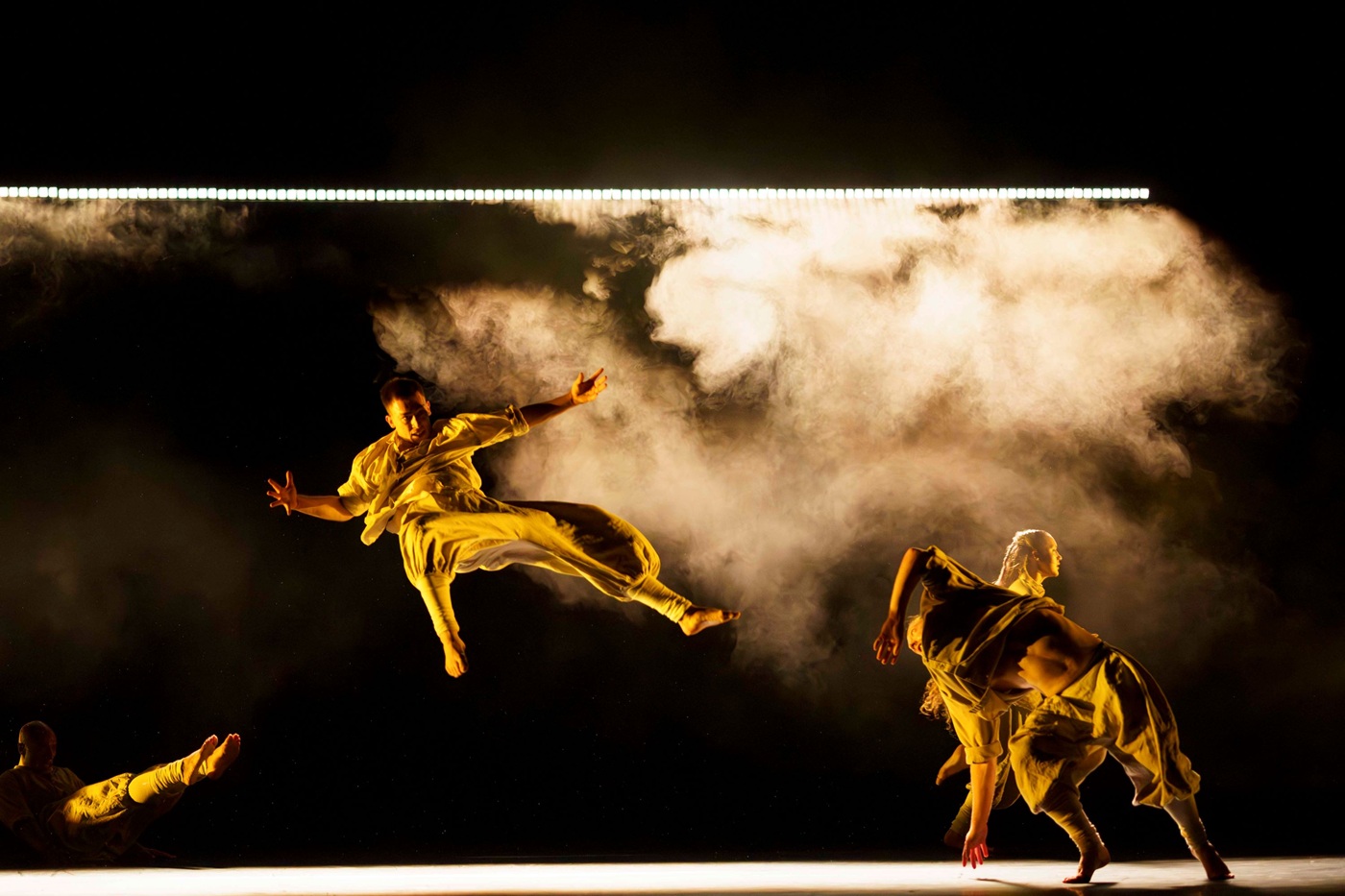
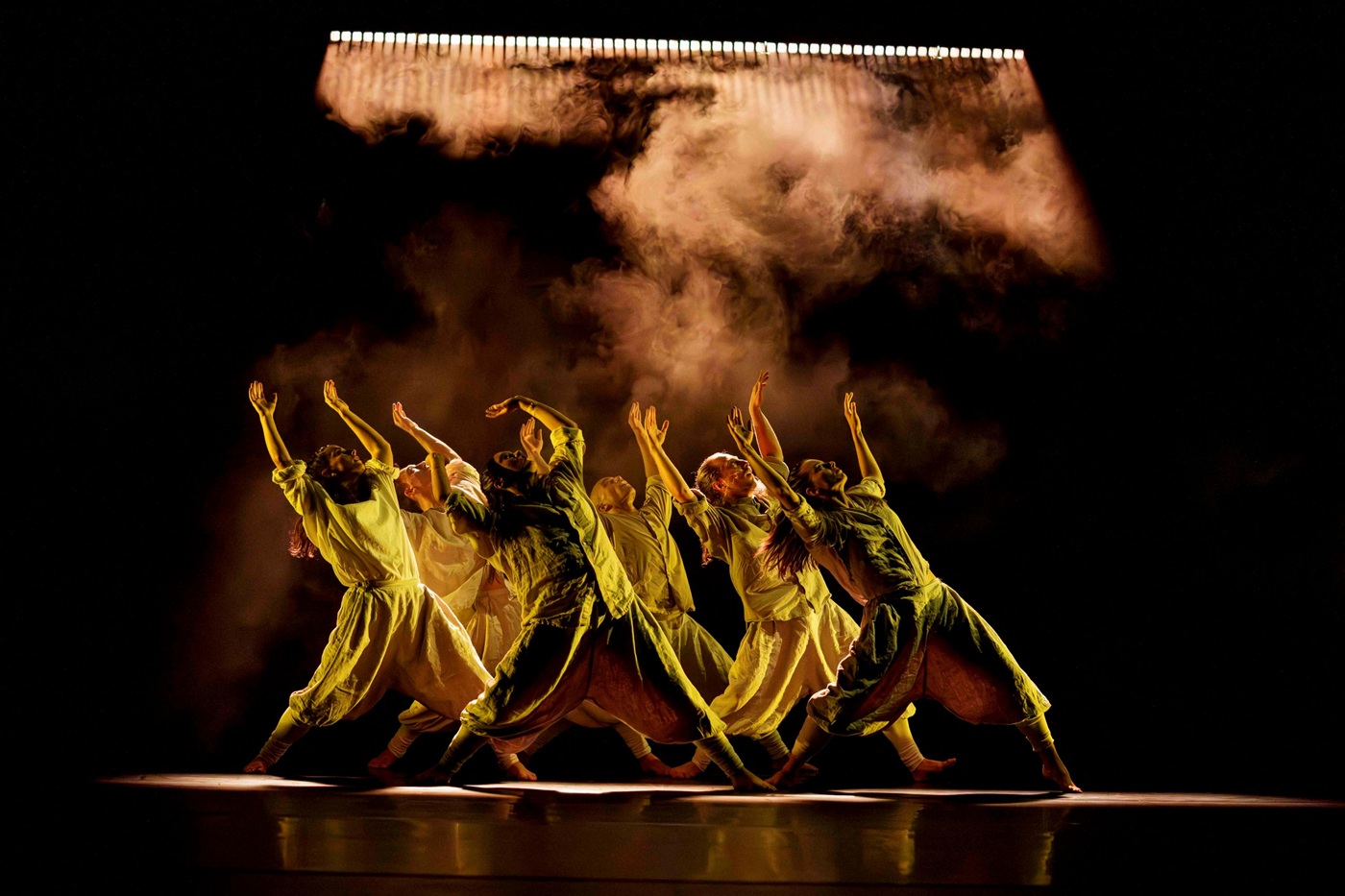
Opening with spectral images transversing the stage under low light, Patterson’s work builds quickly to a fast-paced, energised tempo, with pleasingly dense choreography and tightly organised formations and shifting groupings. Lament is structured and developed in the choreographer’s recognisable and well-established style, and the circling motifs are especially successful examples of his aesthetic fluidity and rapid unison. Costumed in pale, muted, neutral garments featuring puttees, the NZDC dancers deliver the integrated contemporary dance and kapa haka movement material with speed, clarity, and attack. A courageous and cohesively physical response to the echoes of grief, Lament is one of Patterson’s strongest works to date.
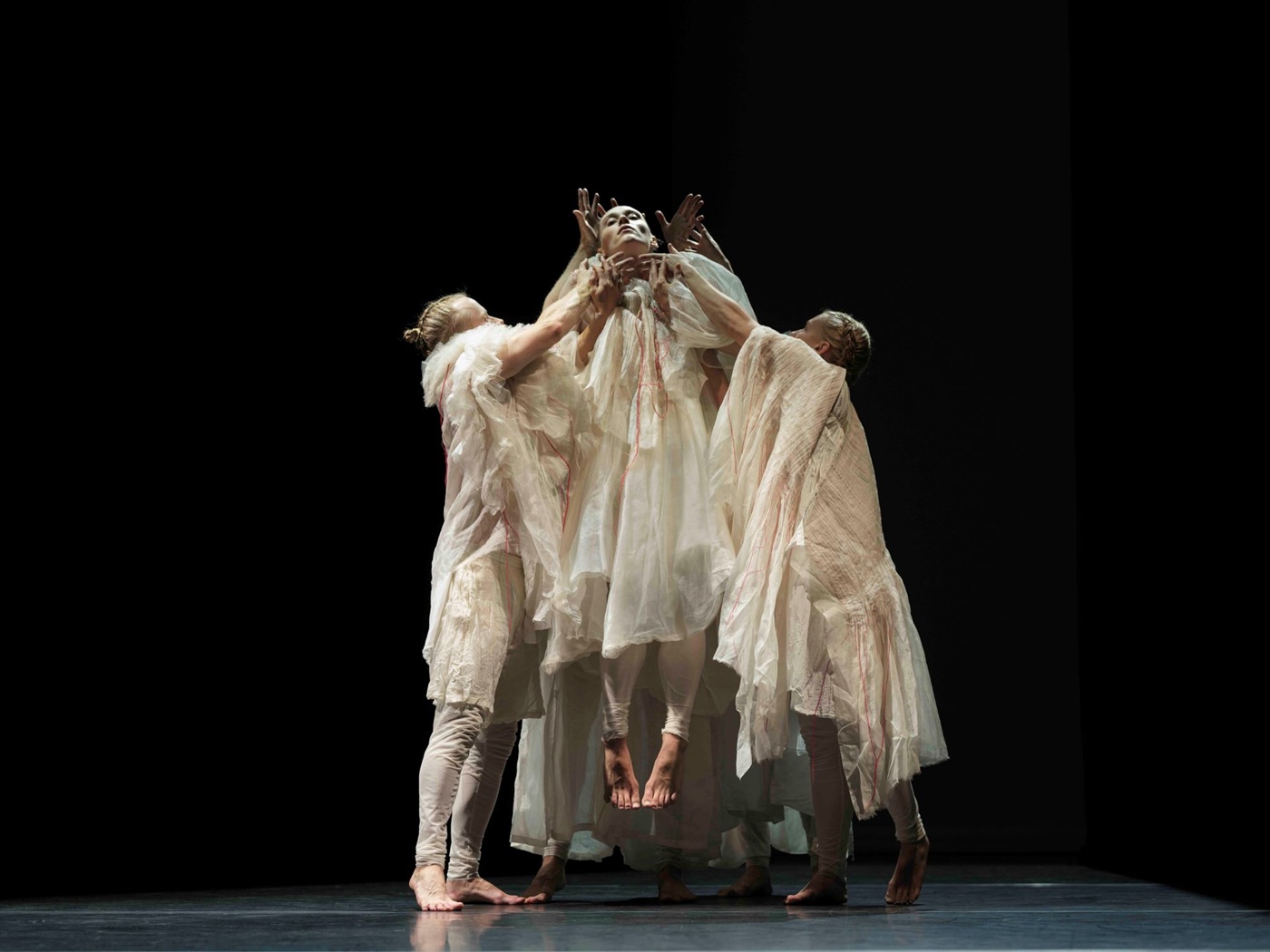
Co3 Contemporary Dance Australia Co-CEO, Artistic Director and choreographer Raewyn Hill’s exquisitely crafted A Moving Portrait is a tender and deeply intelligent consideration of aging, fluidity, and grace. Set to Arvo Pärt’s intriguing Tabula Rasa – a work that may be experienced as hauntingly beautiful or discordant depending on one’s sensibilities – Hill’s calm and assured sculpting of space and tone draws six Co3 dancers together with the subtlety of an inhalation. Released from a slice of white cyclorama behind the black curtain, A Moving Portrait’s dancers progress in asymmetrical groupings with off-centre spacing, their perpetual slow motion, quiet, restless, ebbing across the stage.
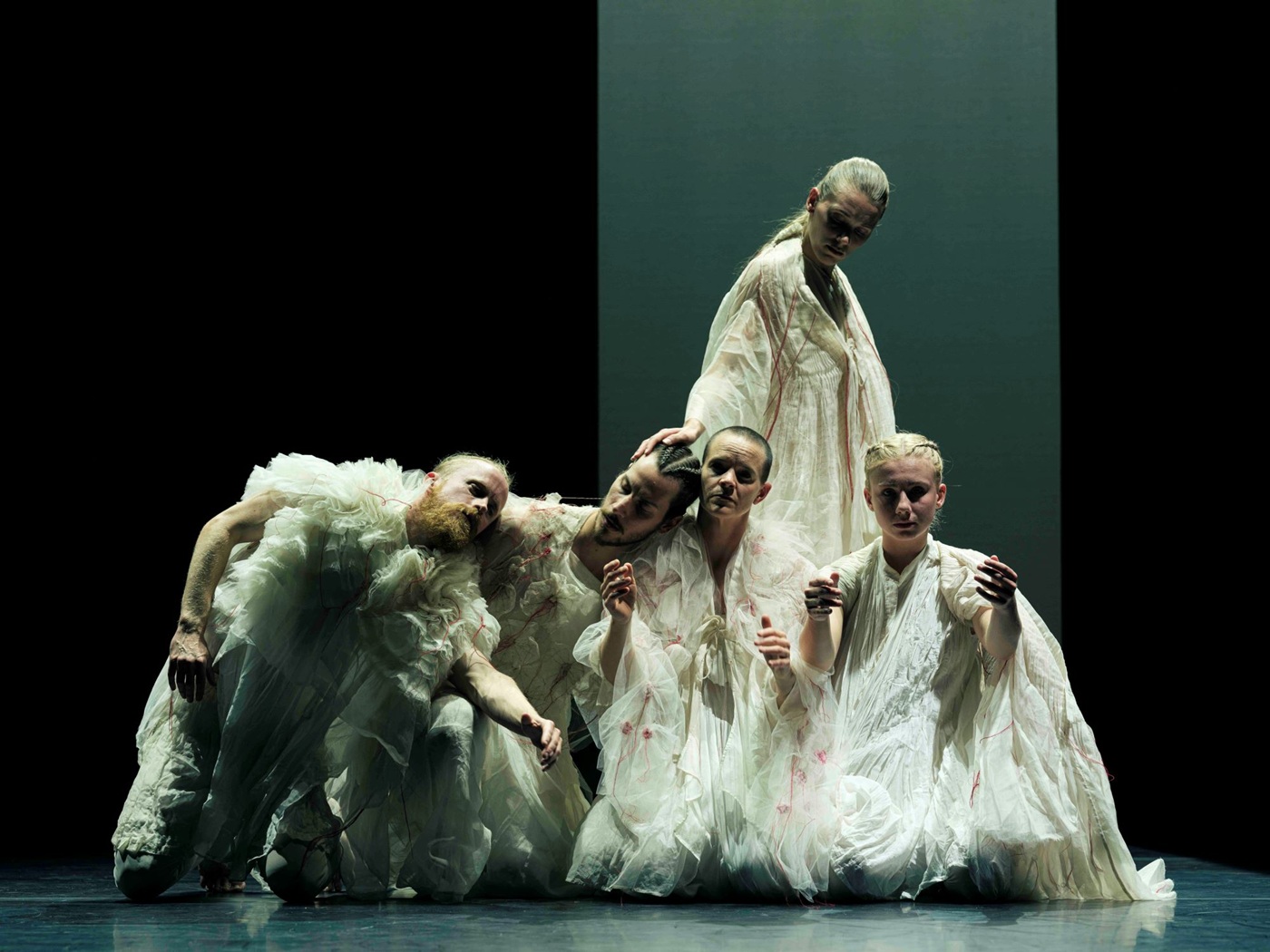
The refinement and confidence of Hill’s choreography expertly balance risk-taking and emotional accessibility. Costumes (Akira Isogawa ) feature dramatic layers of tulle where avant garde architectural silhouettes are tempered with a gentle palette of white and the restrained use of fine veins of red. Choreography unfolding exclusively in slow motion, replacing formalised dance steps with sensitive, contact-led, endlessly adjusting groupings would risk, under any other choreographer, becoming intolerably slow. Not so with Hill; her artistic instincts for holistic world-building onstage is razor-sharp, resulting in a work that is meditative, mesmeric, invitingly genuine, and emotionally. All six Co3 dancers inhabit A Moving Portrait with precision, nuance, respect, and loving care.
Following the intermission, the much-anticipated posthumous revival of a work by the remarkable dancer and choreographer Douglas Wright in Aotearoa New Zealand for the first time since his passing in 2018; the titular Gloria. Stager Megan Adams and Artistic Advisor Ann Dewey for the Douglas Wright Estate have overseen the return home of this taonga, initiated by Raewyn Hill, in a co-production with a cast of dancers from both Co3 and NZDC. Gloria is dedicated to Deidre Mummery (07/11/54 – 02/09/85) in celebration of her life, and was first performed in 1990 at the Maidment Theatre in Auckland by the Douglas Wright Dance Company, in courageous and ebullient response to receiving his diagnosis of HIV. Although the posthumous revival is commonplace in the ballet world, it is more unusual in contemporary dance, particularly in Aotearoa New Zealand; Gloria headlining the 2026 Aotearoa New Zealand Festival of the Arts in a production with the New Zealand Symphony Orchestra and the Voices of New Zealand Choir is a momentous occasion for the arts community.
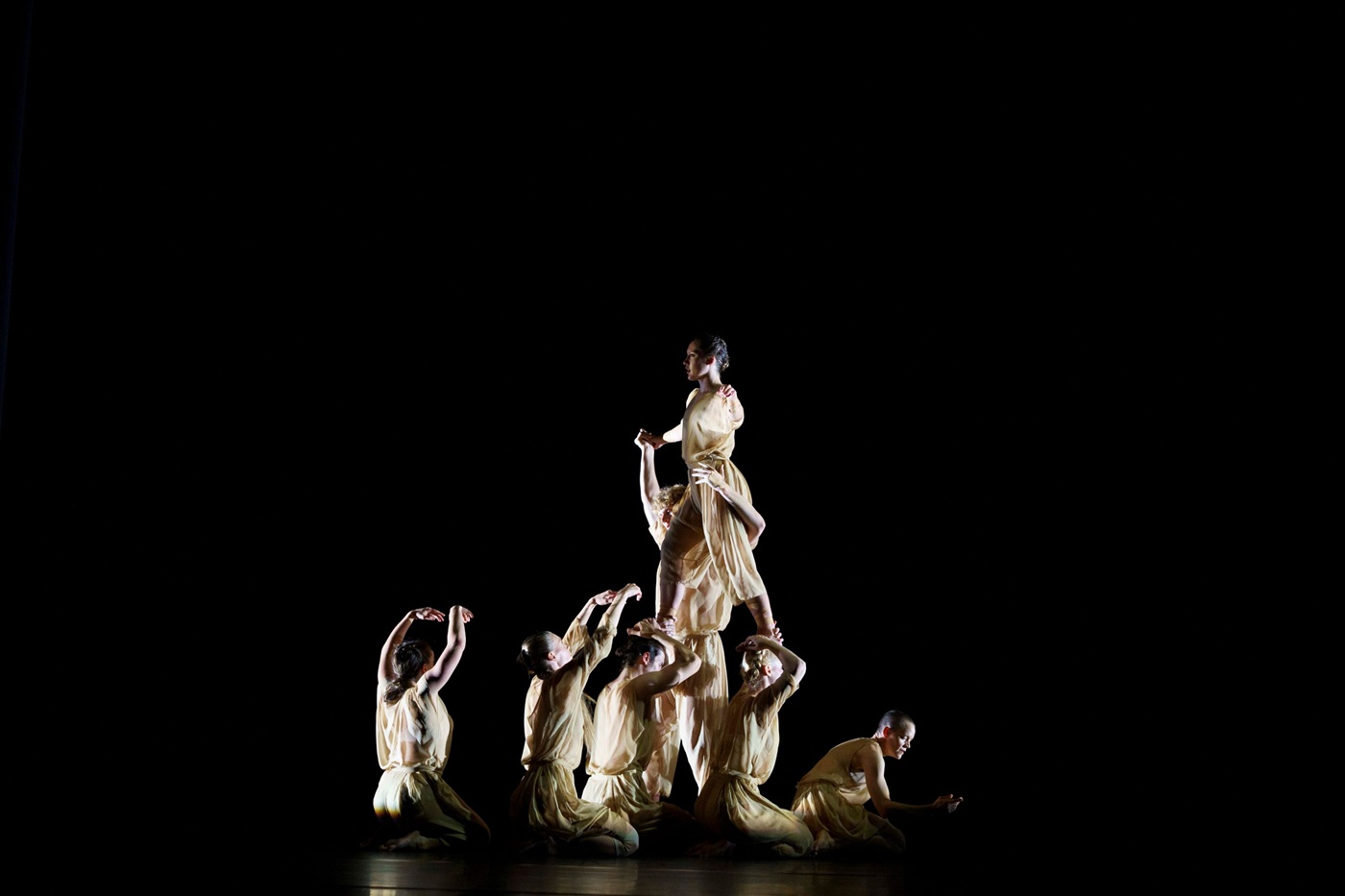
Bold, confident, vital, and overflowing with rigour and joy, Wright’s masterpiece Gloria is a blueprint for the development and sophistication of contemporary dance in Aotearoa. Although his movement materials have been canonised, refined, disseminated in dance schools and tertiary training providers now for decades, their iterations in Gloria remain raw, fresh, innovative, and delightful. Throughout the work, a plethora of iconic images (that generations of dancers have grown up with an awareness of through the collective consciousness) emerge onstage on vibrant, living bodies; a dancer in an infinity walk on the heads of others, another tossed like a rainbow above a line of dancers, the exquisitely controlled skipping woven through an obstacle course of walkers in slow motion, the loose and delightful elevations, a human skipping rope (still eliciting gasps from the audience almost 40 years on), the writhing sexualised mechanics of a train of dancers on the floor, the edgier duo between two men (originally danced by Taiaroa Royal and Wright himself) reminding us of the darker palette the choreographer often worked in.
Experiencing Wright’s work alongside the immaculate artists of the New Zealand Symphony Orchestra and the Voices of New Zealand choir conducted with sensitivity and precision by Dr Joseph Nolan is a rich and rewarding experience; glorious and essential art. Lead soprano and alto voices are otherworldly in their beauty, and the power and majesty of Vivaldi’s beloved score are faultlessly captivating. Shifting between harmonious connection with the nuances of the music and perfect confidence when moving without its instruction, Wright’s choreography is a voice distinctive and fiercely intelligent.
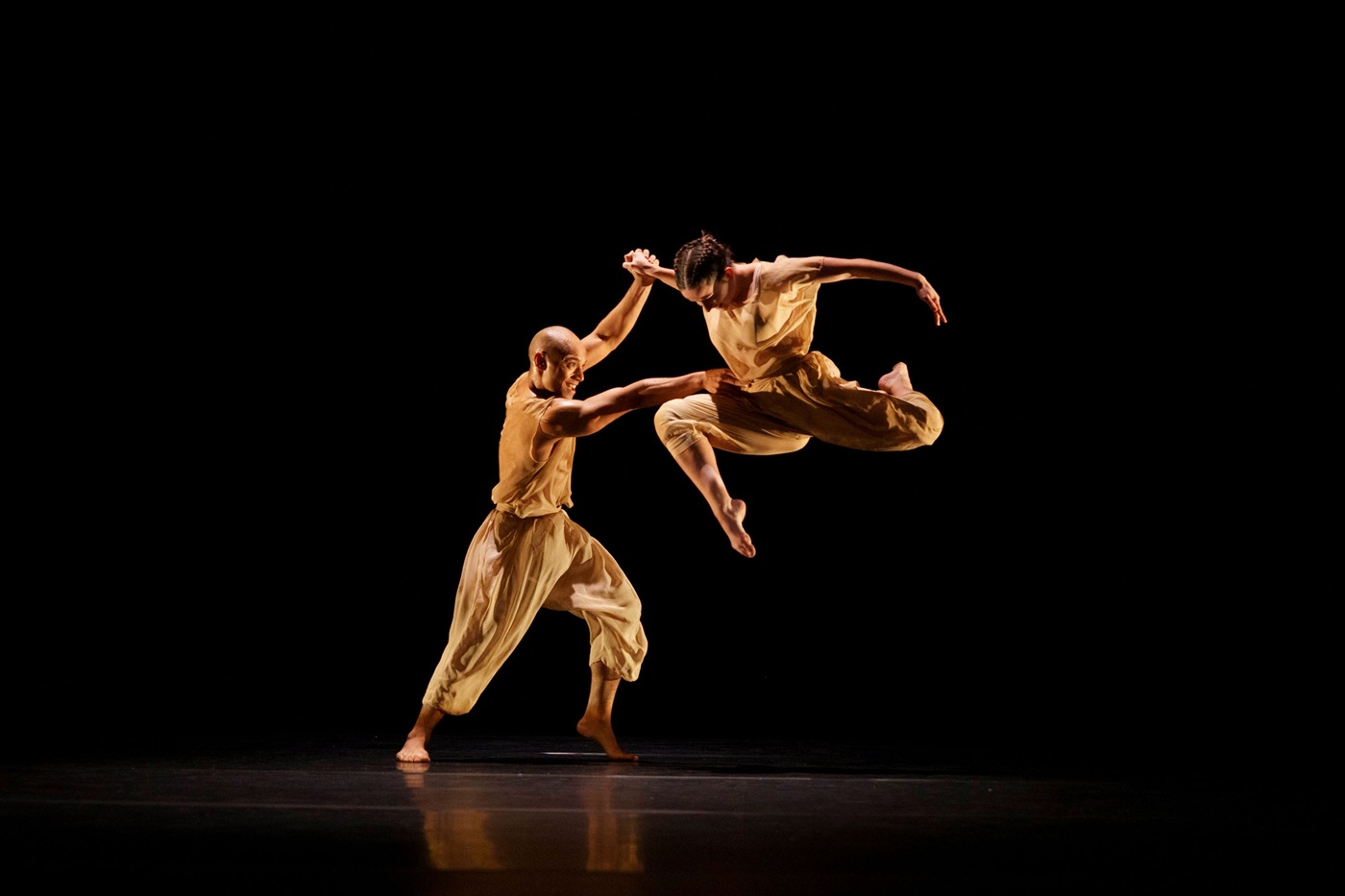
The dancers of Co3 and NZDC bring Gloria to life with respect for the lineage of the work alongside their own panache, and although the cast are perhaps less visually cohesive than the original, they work to embody the knowledge gifted them by the hub of dancers who have performed this seminal work in previous years. Hints of Wright’s signature freedom of intention within movement material are slightly muted (in terms of extension attack in elevations, and the rejection of articulation of the feet), but these are minor and probably natural differences of physicality and interpretation. I miss the bold (and possibly unfashionable in 2026) sunshine yellow of the original costumes, and although the neutral current versions are warmed with lighting, the rigorous joy of the original is dampened here. The suspended/birth imagery of the closing moments is less impactful and visible than expected, but does not detract from the overall effect of the work.
Profoundly emotional and richly nostalgic, this glorious, loving revival of Gloria is a privilege to experience in person. May this be the first of many homecomings of Wright’s masterful choreographic work.