

 DANZ
DANZSt James Theatre
Wellington
25 February 2026
Choreography: Alice Topp
Music: Christopher Gordon
Set & Lighting Design: Jon Buswell
Costume Design: Aleisa Jelbart
Dramaturgy: Ruth Little
Conductor: Hamish McKeich
String Ensemble: Musicians of the New Zealand Symphony Orchestra
A Co-Production with West Australian Ballet
Reviewed by Brigitte Knight
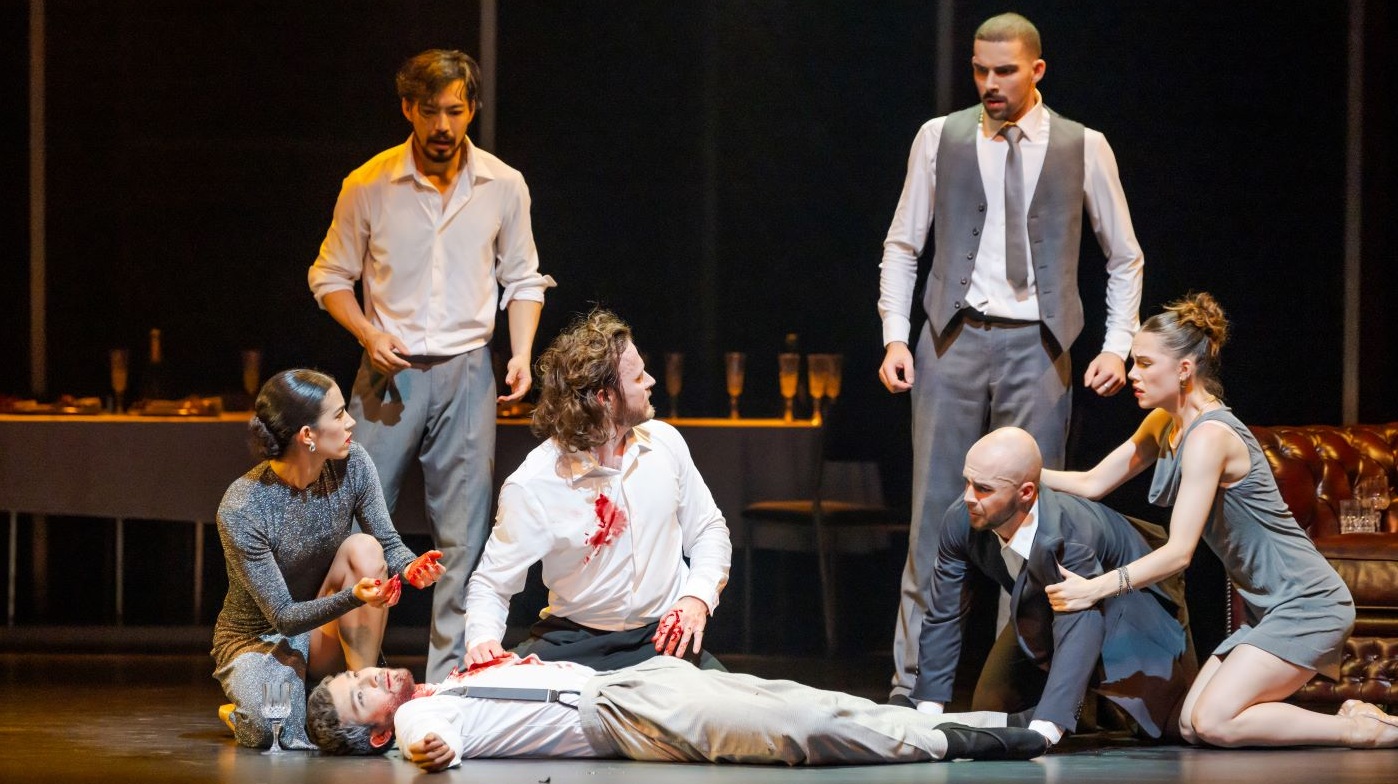
“…ambition, obsession, murder, madness, desire…”
For the Royal New Zealand Ballet’s opening season of 2026, acclaimed Australian choreographer Alice Topp returns with the world premiere of her first full length narrative ballet Macbeth, which features concurrently as one of the headline acts for the Aotearoa New Zealand Festival of the Arts and the overlapping Auckland Arts Festival. The brilliantly cohesive and directional pairing of Topp and English set and lighting designer Jon Buswell collaborate to deliver a fearlessly contemporary production of the Scottish Play, rich in Shakespearean drama, yet tempered with a bold and vital modern edge.
It may be impossible to overstate the effectiveness of Buswell’s design for Macbeth – cold, industrial, exposed metallic walls stretching the full height of the proscenium; a bisecting mezzanine level juxtaposing public and private scenes; a variety of tables wielded as metaphors for action and tragedy; the sinister contrast of projected fragments of text, smoke-like on gauze. Buswell’s lighting blends seamlessly into this inhumane and monochrome world of power and ruthless ambition, achieving impressive effects such as the ghostly apparition of Banquo in Act II, without drawing focus from the physical action or holistic design. Similarly, props are minimalist but thoroughly effective and considered.
-PhotoStephenA'Court.jpg)
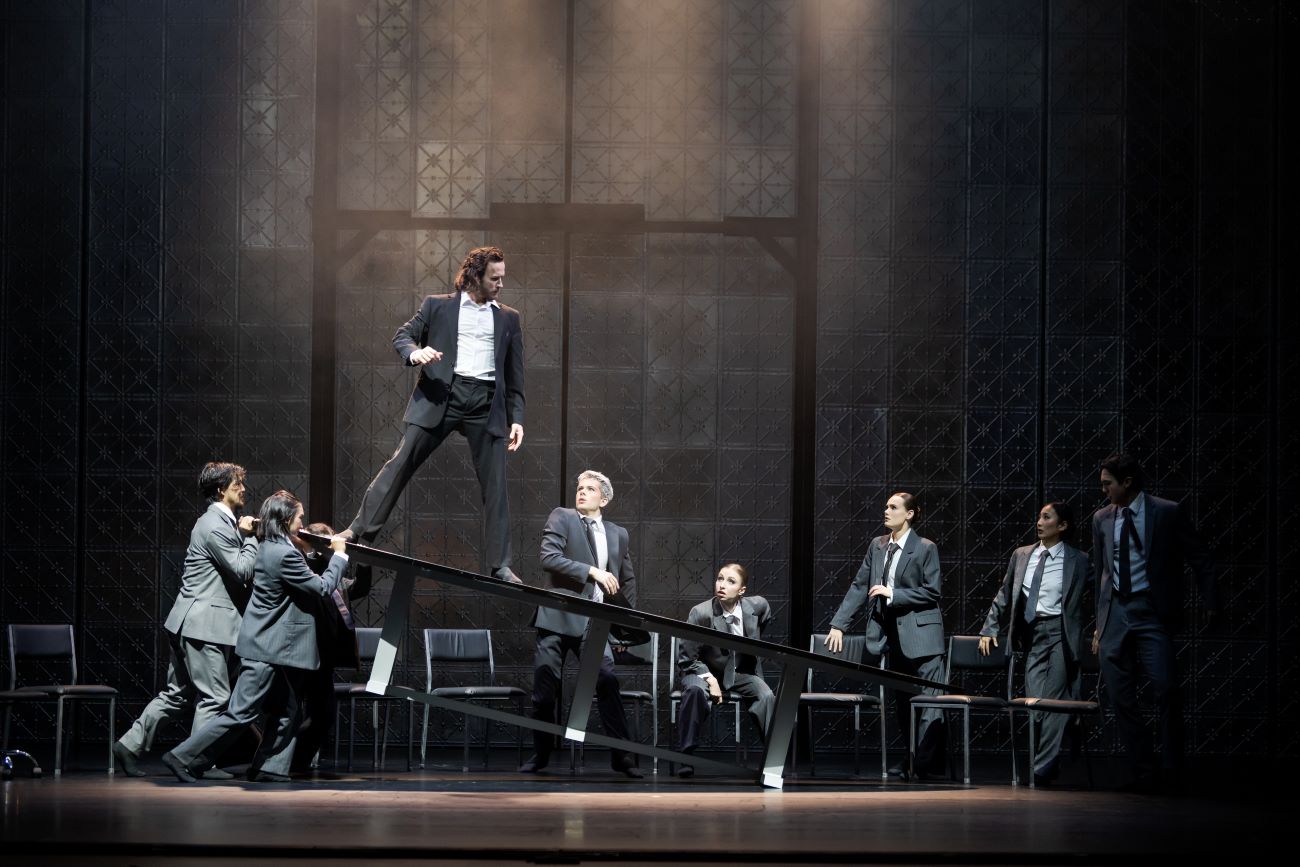
“Macbeth”, Royal New Zealand Ballet. Photos by Stephen A'Court.
A pulsating, bombastic original score by Christopher Gordon blends musical themes informed by Shakespeare’s text with influences from a range of musical genres and eras (1940s big band, 1970s funk, hints of EDM) under an umbrella of horror-adjacent and progressive yet heavy rock. One hundred and twenty-six musicians contributed to the recorded score, which is layered beneath a live string ensemble of musicians of the New Zealand Symphony Orchestra vibrantly and precisely conducted by Hamish McKeich. Live vocalisations by dancers, occasional spoken word, reverb microphone effects, body and set percussion, and choral elements build and warp the score in deliberate and original layers.
Macbeth (Brandon Reiners) and Lady Macbeth (Ana Gallardo Lobaina) are singularly expansive and generous roles, with broad and detailed emotional and artistic scope across dramatically varied pas de deux, solos, and ensemble interactions. The Royal New Zealand Ballet’s opening night cast makes rockstars of its lead dancers; Reiners a commanding stage presence as Macbeth builds artistic projection, attack, and scope through the course of the evening, Gallardo Lobaina a show-stopping tour de force, with a triumphant performance mastering the role of a lifetime. Gallardo Lobaina’s extension, precision, and versatility in the contemporary ballet style are the vehicle for her superb and sophisticated characterisation, tempering Lady Macbeth’s libidinous, rampant ambition with the rare yet sufficient vulnerability to ensure audience captivation.
&AnaGallardoLobaina(Lady Macbeth)-PhotoStephenA'Court.jpg)
&AnaGallardoLobaina(Lady Macbeth)-PhotoStephenA'Court.jpg)
Branden Reiners (Macbeth) and Ana Gallardo Lobaina (Lady Macbeth). Photos by Stephen A'Court.
Kirby Selchow, Ruby Ryburn, and Shaun James Kelly as The Influencers (Witches) are magnificent, ceaselessly captivating, rapacious and perfectly vulgar; their staccato, writhing, improvised movement vocabulary and distorted vocalisations manifesting Shakespeare’s intended supernatural horror with contemporary grotesquery. Laurynas Vėjalis as Duncan, Dane Head as Malcolm, and Kihiro Kusukami as Banquo breathe life and bring weight to their characterisations, ensuring they emerge from the muted ensemble colour palettes with status of their own. Casting in a narrative ballet is often critically important, and it is inspiring to note Topp’s decision to have two women and two men (across the four casts) dance the role of Macbeth’s closest friend and ally, Banquo. The roles of Lennox, Donalbain, and Ross are created on and danced by women in each of the casts.
-PhotoStephenA'Court.jpg)
-Photo by Stephen A'Court.jpg)
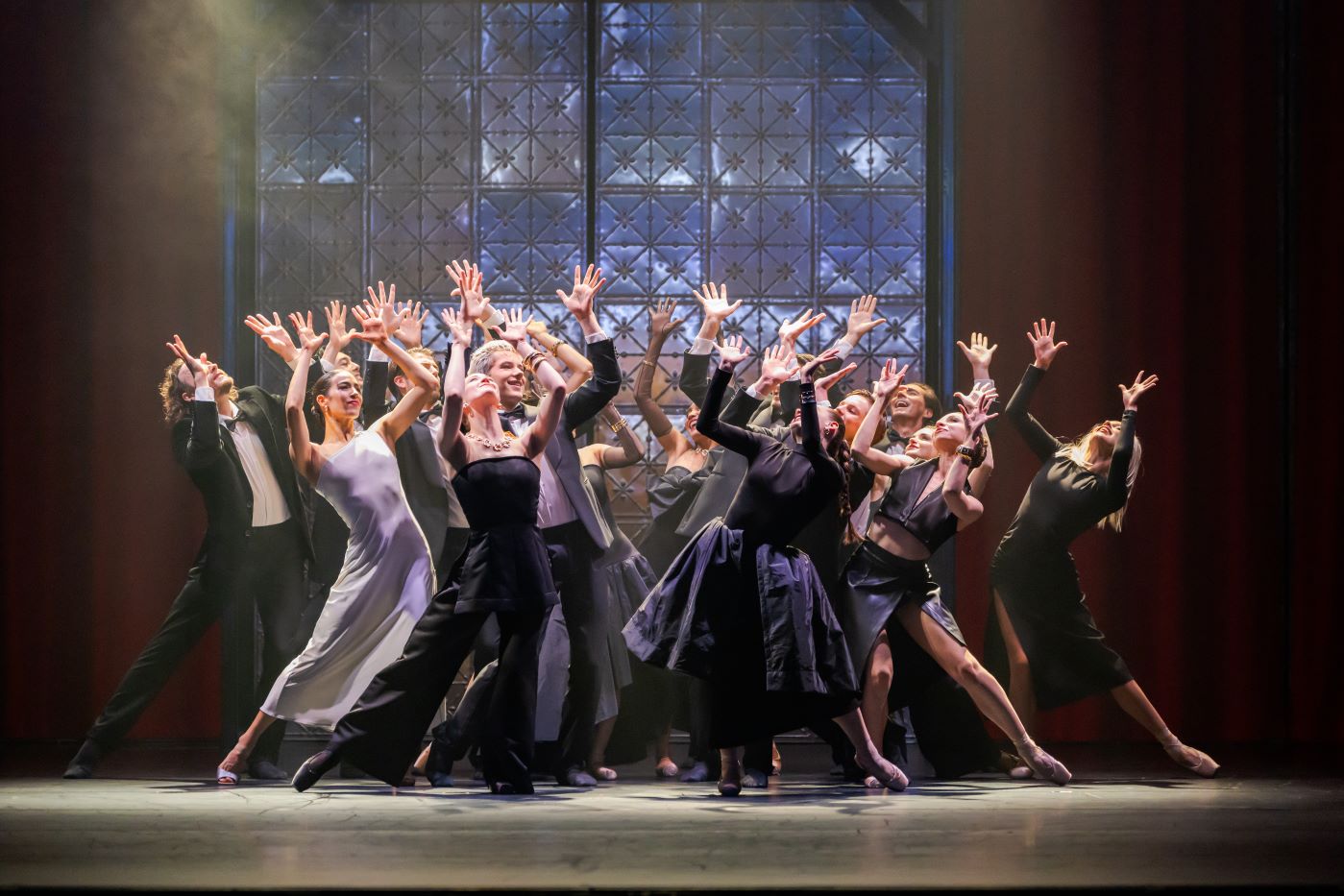
Topp’s choreographic strengths tend towards emotive, subtle, abstract contemporary ballet pas de deux, with innovative partnering and sophisticated lines, which she utilises in Macbeth to communicate relational proximity and shifts between characters. In approaching a full-length narrative production, she features such interactions within a framework of modern choreography and pared-back narrative detail, giving the corps de ballet plenty of scope in which to shine. Act I boardroom table scenes populated by monochrome suited people feel referential to both Crystal Pite’s influential The Statement (2016), and Kurt Jooss’ The Green Table (1932), which deal with the politics of power through contemporary movement. In just these scenes there appeared to be room for more choreographic density and risk-taking. Topp has manifested viscerally the tragedy and fatefulness of the original Shakespeare through skillful timing, direction of focus, and superlative imagery; the intimate glimpses of the bathtub, the contrasts in Lady Macbeth’s movement vocabulary, Macbeth’s manipulated crown imagery, a half-finished bottle of red wine, the final, brutal climax. Topp’s choreography coupled with costume designs by Aleisa Jelbart (in collaboration with Rembrandt of Wellington) establish a setting of politics, power, corruption, and privilege which is deliberately uncomfortable in its timeliness.
-PhotoStephenA'Court.jpg)
-PhotoStephenA'Court.jpg)
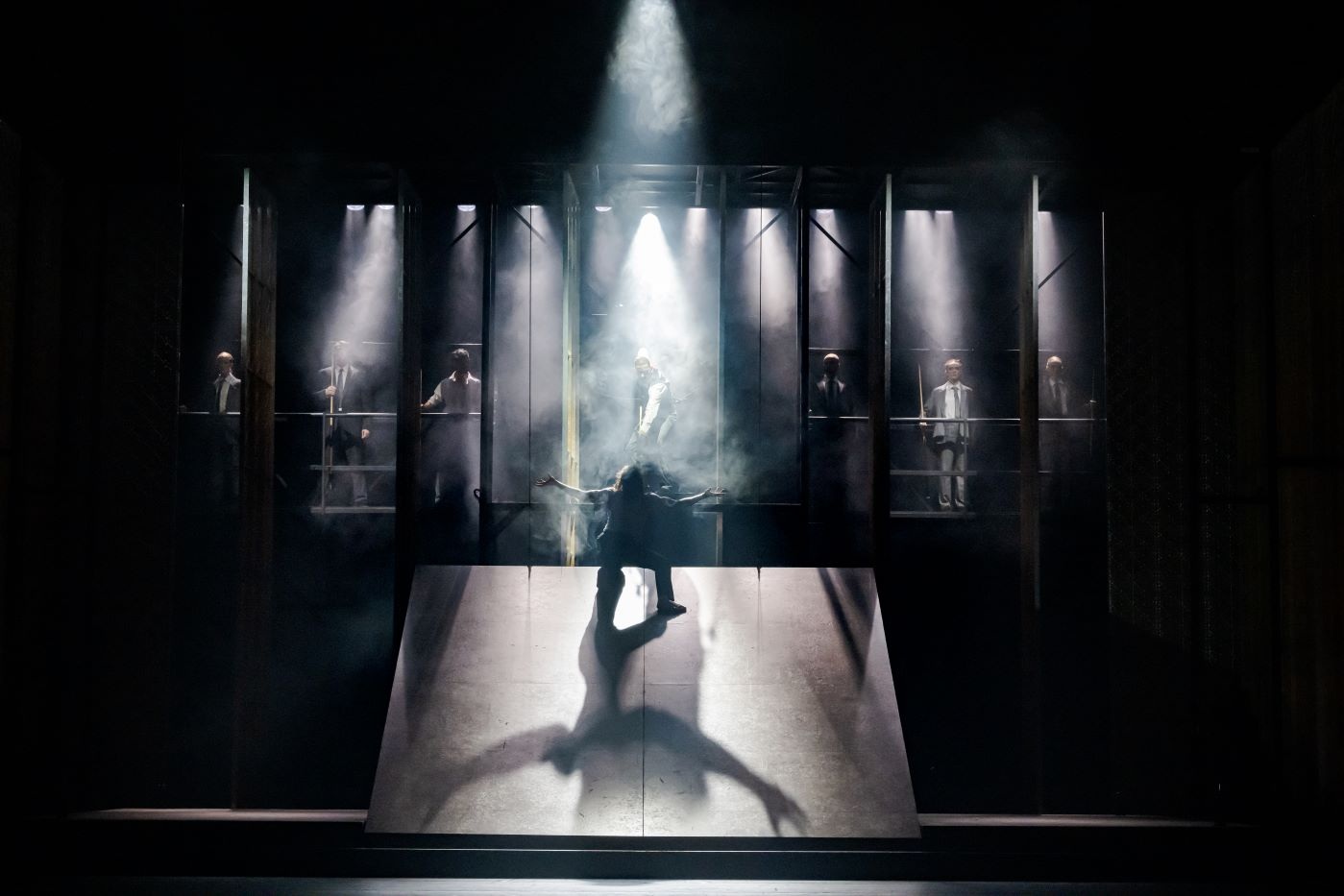
Flawlessly combining visual and choreographic intentions, the worldbuilding and intensity of the Royal New Zealand Ballet’s Macbeth is seamless and commanding.
Note:
The performance of the score is significantly louder than a traditional orchestra, so some audience members may find musicians’ earplugs helpful.
The Royal New Zealand Ballet website appropriately provides the following guidance for audience members, which is not prevalent in all marketing material:
“Macbeth contains mature themes and scenes that some audience members may find distressing. These include stylised depictions of violence (including murder and suicide), themes of death and grief, representation of drug use, sexual themes and suggestive content, and psychological manipulation and distress. This production is classified as M – suitable for mature audiences. It may be attended by all ages but is more suitable for viewers ages 16 and over. Parental discretion is strongly advised”.
Gallery photos by Stephen A’Court
Gallery is loading. Please wait. Javascript will need to be enabled to view it.