

 DANZ
DANZCivic Theatre
Auckland
21 November 2025
Reviewed by Jenny Stevenson
The packed Civic Theatre in Tāmaki Makaurau gave a rousing welcome to Black Grace dance company’s Artistic Director and Choreographer Neil Ieremia, as he opened the show with an appreciative speech that celebrated the company’s thirty years in the business. It is an extraordinary achievement by anyone’s reckoning and it is encouraging that many years after its founding, the company enjoys a strong international reputation, particularly in the United States where they have repeatedly toured.
An accomplished and amusing raconteur, Ieremia outlines the story of how he came to found the all-male company (as it was then), and lists its subsequent achievements and evolution. He admits to a propensity to look forward rather than backwards and speaks of many new projects in the pipeline. These include an initiative to counteract the scourge of rheumatic fever (from which Ieremia suffered as a youngster), the proposed formation of a training academy and an imminent move back into the city of Tāmaki Makaurau – where everything first started.
“If Ever There Was a Time” by Neil Iremeia. Photos: Jinki Cambronero
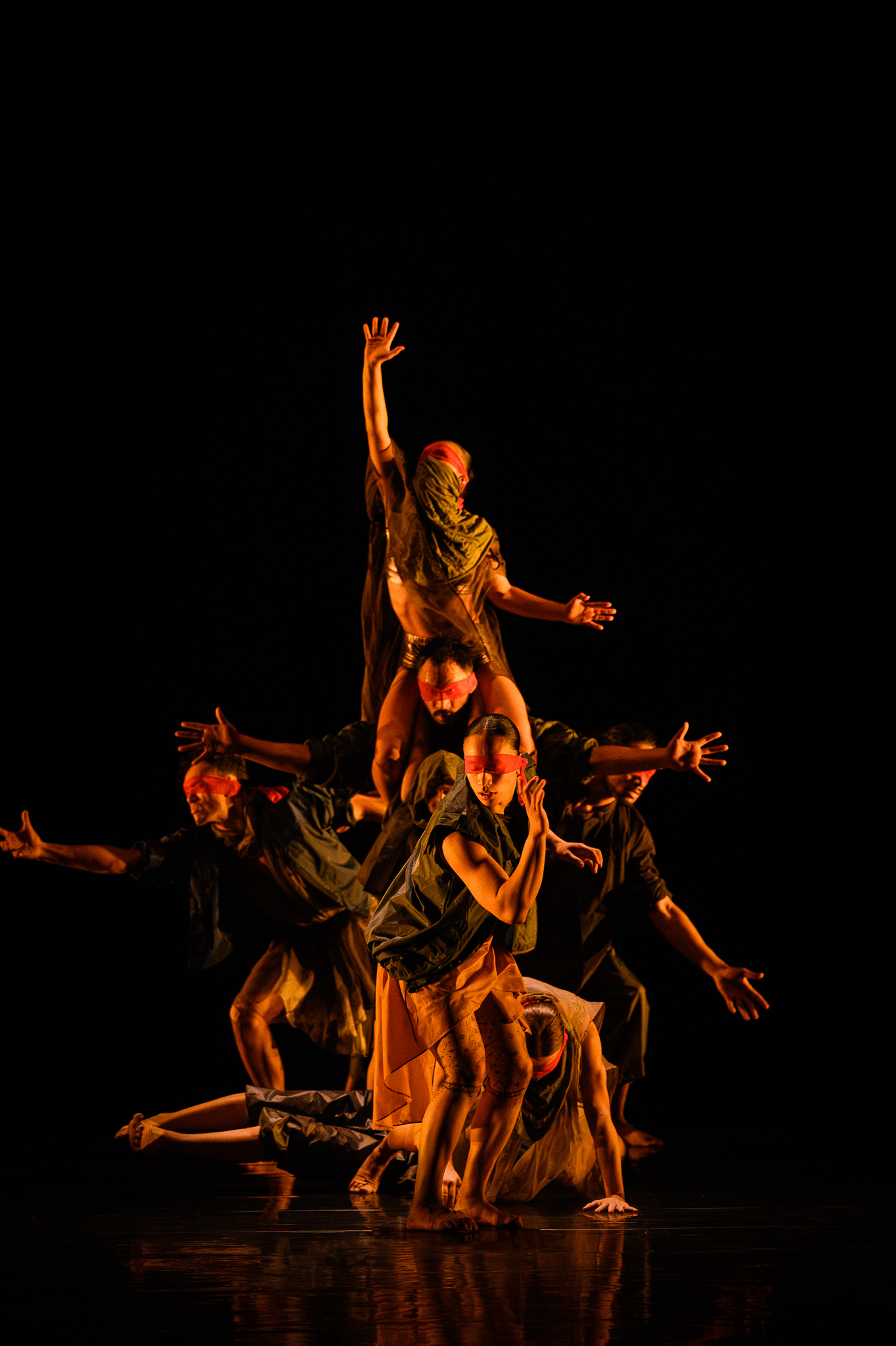
Never one to duck a challenge, Ieremia has chosen as his featured work for the programme an examination of the destruction that blind allegiance to religion can wreak in a community and the way in which it can “erase culture and indigenous knowing” while justifying “unimaginable brutality”. As an inspirational source, he quotes verbatim a poem that looks towards a salvation of sorts – with an element of hope infused into the words.
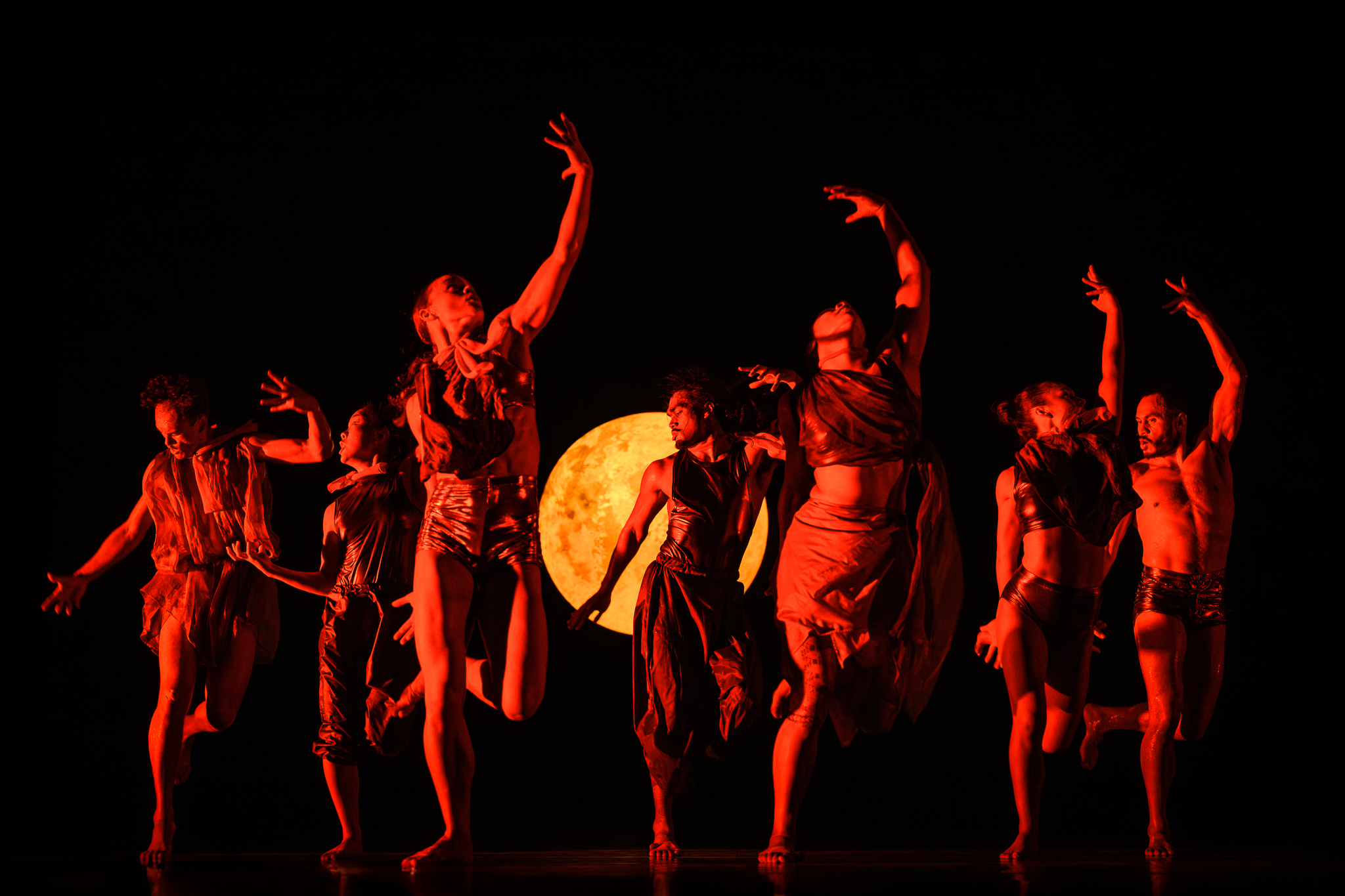
The resulting high-energy work is If There Ever Was a Time. It is episodic in design – consisting of a series of roiling vignettes that take the time to imprint stark images on the mind of the viewer. These are enacted to an arrangement of disparate musical works, compiled and sometimes even sung by Ieremia (together with Isitolo Alesana), with a sound design by Faiumu Matthew Salapu (aka Anonymouz).
Many images stand out. A multi-armed totemic figure flails and grasps at a woman who is performing a Pacific dance with undulating arms; formations of hunched over bodies execute vigorous stomping and circular arm movements; a flag-wielding man weaves through a group of onlookers; and four dancers perform the Dance of the Little Swans from Swan Lake. A woman carries a sign saying “Round 1096” (year of the First Crusade) that underscores several ensuing combative scenarios.
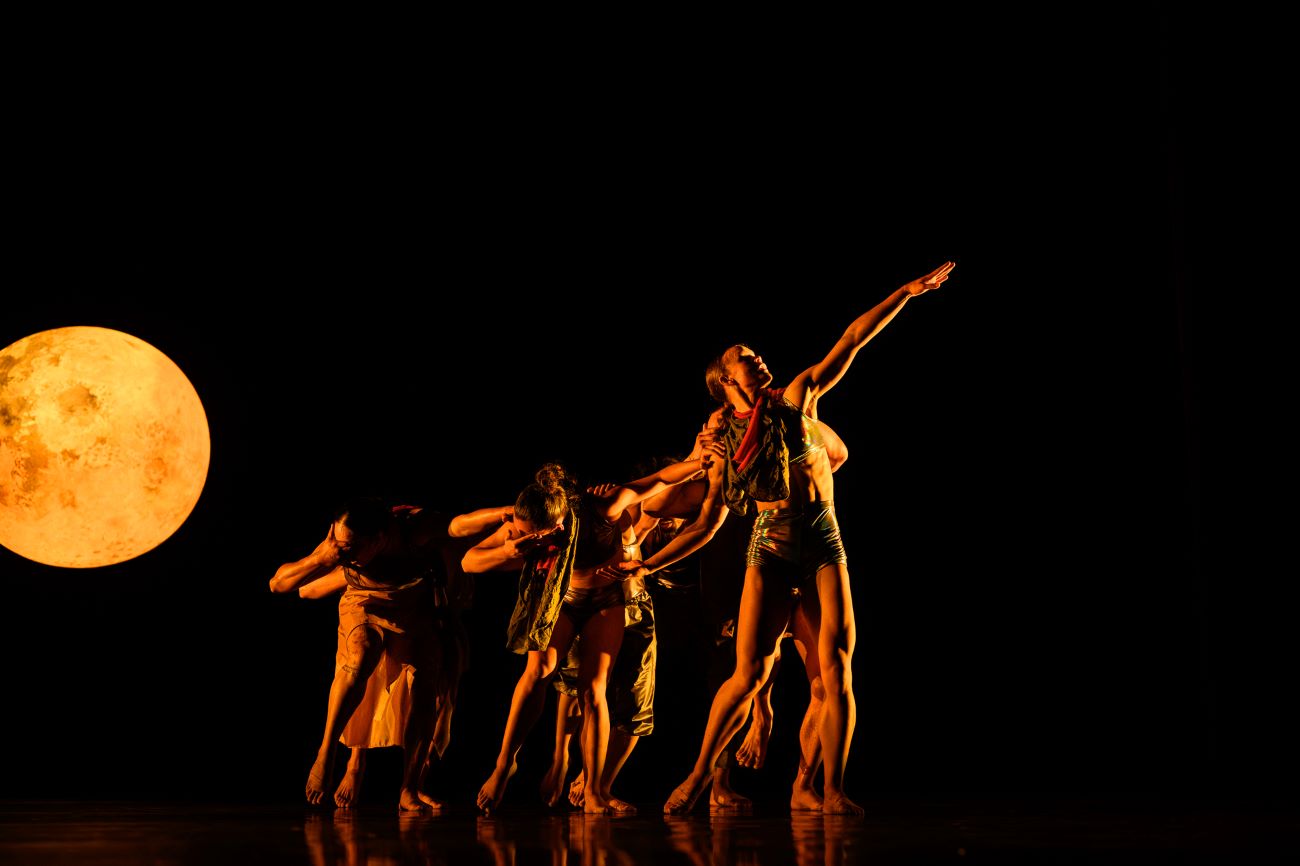
When an incandescent moon lowers from above, there is a subtle change of mood. A woman skips non-stop using a glowing, lit skipping rope as a creeping phalanx of dancers stalk her. A fraught situation is enacted when two figures restrained by cloth covering their heads and tailed by long cloth strips, are pulled back by attendant figures creating distinct tensions. The figures strain forwards in an attempt to join together and then embrace briefly to kiss, before being separated again. Mellow blues chords herald a closure of sorts as the dancers perform an attenuated slap dance. The tensions begin to dissipate and the figures meld together in a unified cluster as the work concludes.
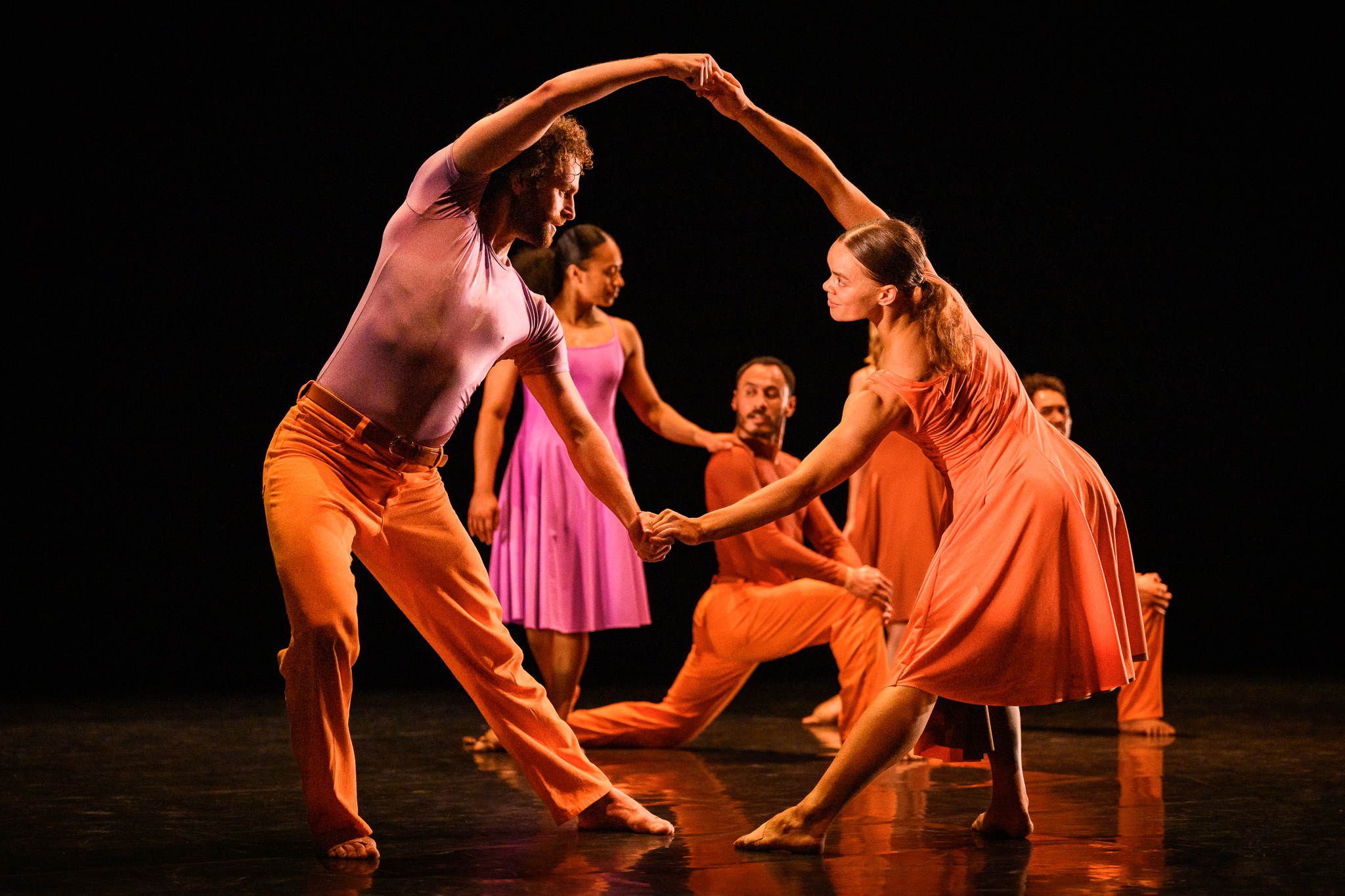
“Esplanade” by Paul Taylor. Photos: Jinki Cambronero
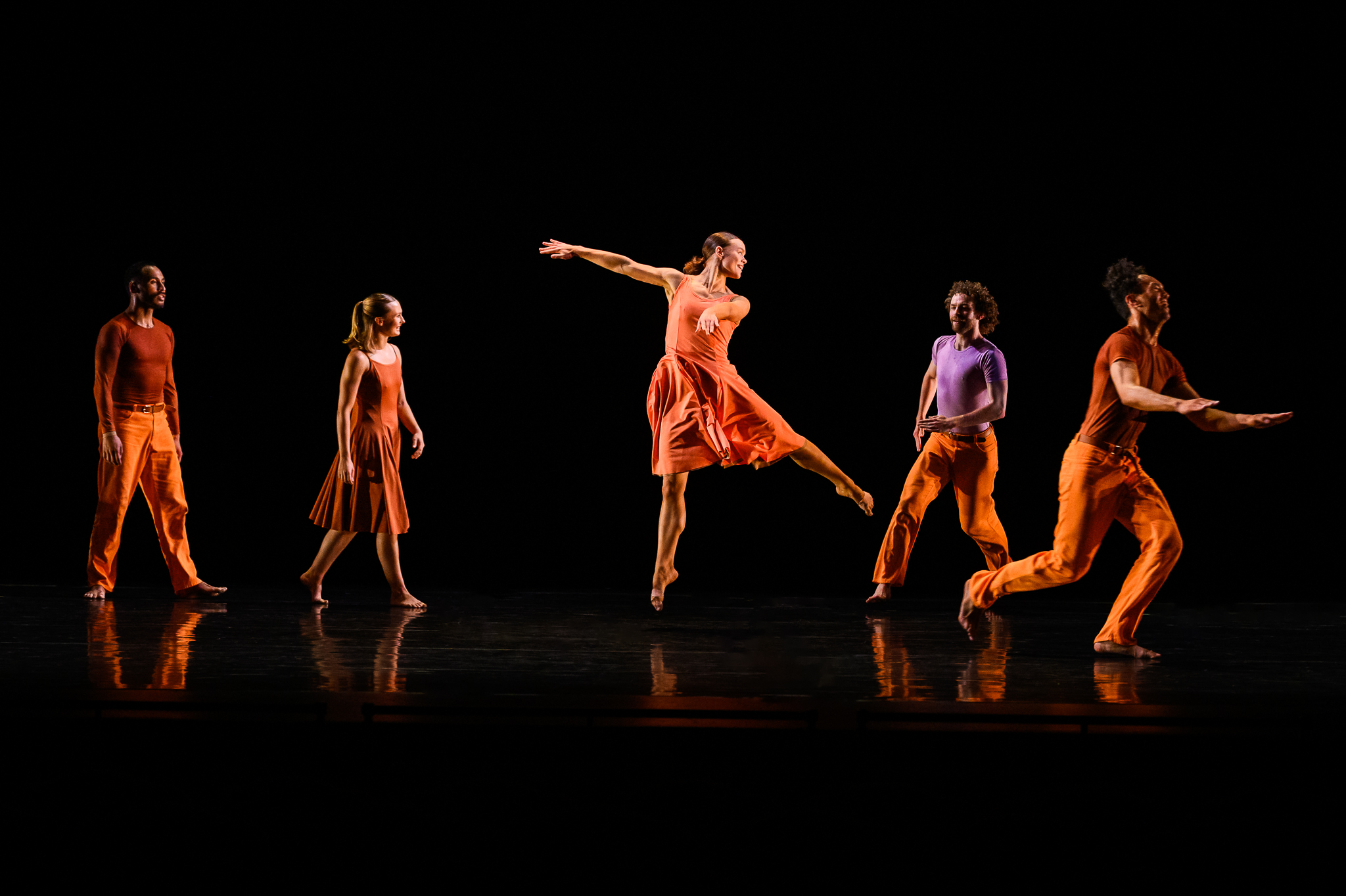
The second half of the programme is a complete contrast as the dancers enter the playful and joyous world of Paul Taylor’s iconic choreography Esplanade set to music by Johann Sebastian Bach. Staged especially for the Company by Richard Chen See a former principal dancer in the Paul Taylor Company for many years, the works uses “pedestrian movement” to create an absorbing, vivacious work that celebrates “youthful exuberance”.
Slides, running, jumping, falling off-balance and careful placings create an ever-changing dynamic that perfectly mirrors Bach’s music - almost note for note. The glorious sounds of his Violin Concerto in E Major and the Double Concerto for Two Violins in D Minor (Largo and Allegro) set the scene, But it is undoubtedly the dancers who throw themselves whole-heartedly into this work who are the stars of the evening as they enact their touching, guileless connections and spirited displays of sheer athleticism. It is a joy to watch and to marvel at their stamina.
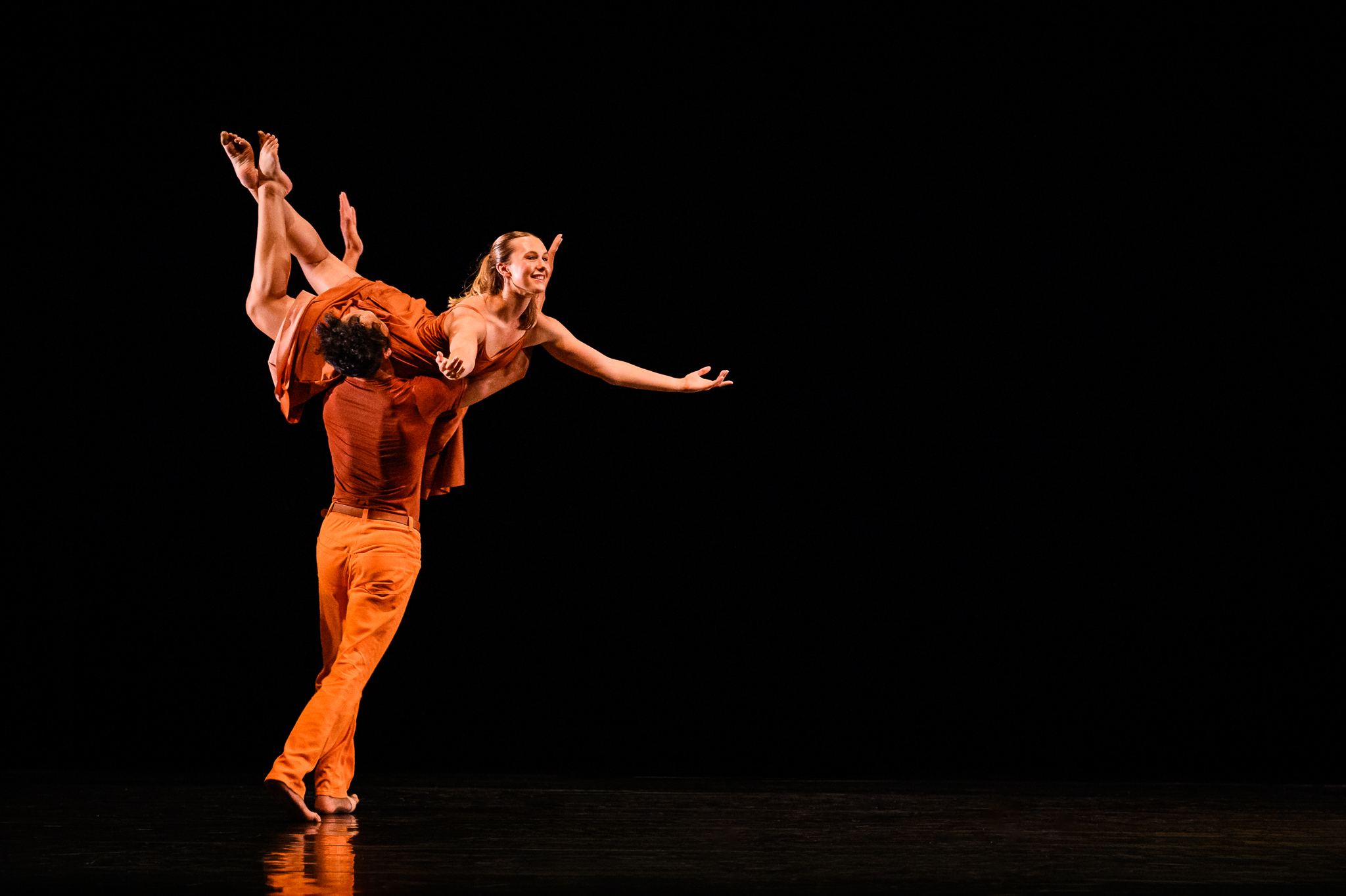
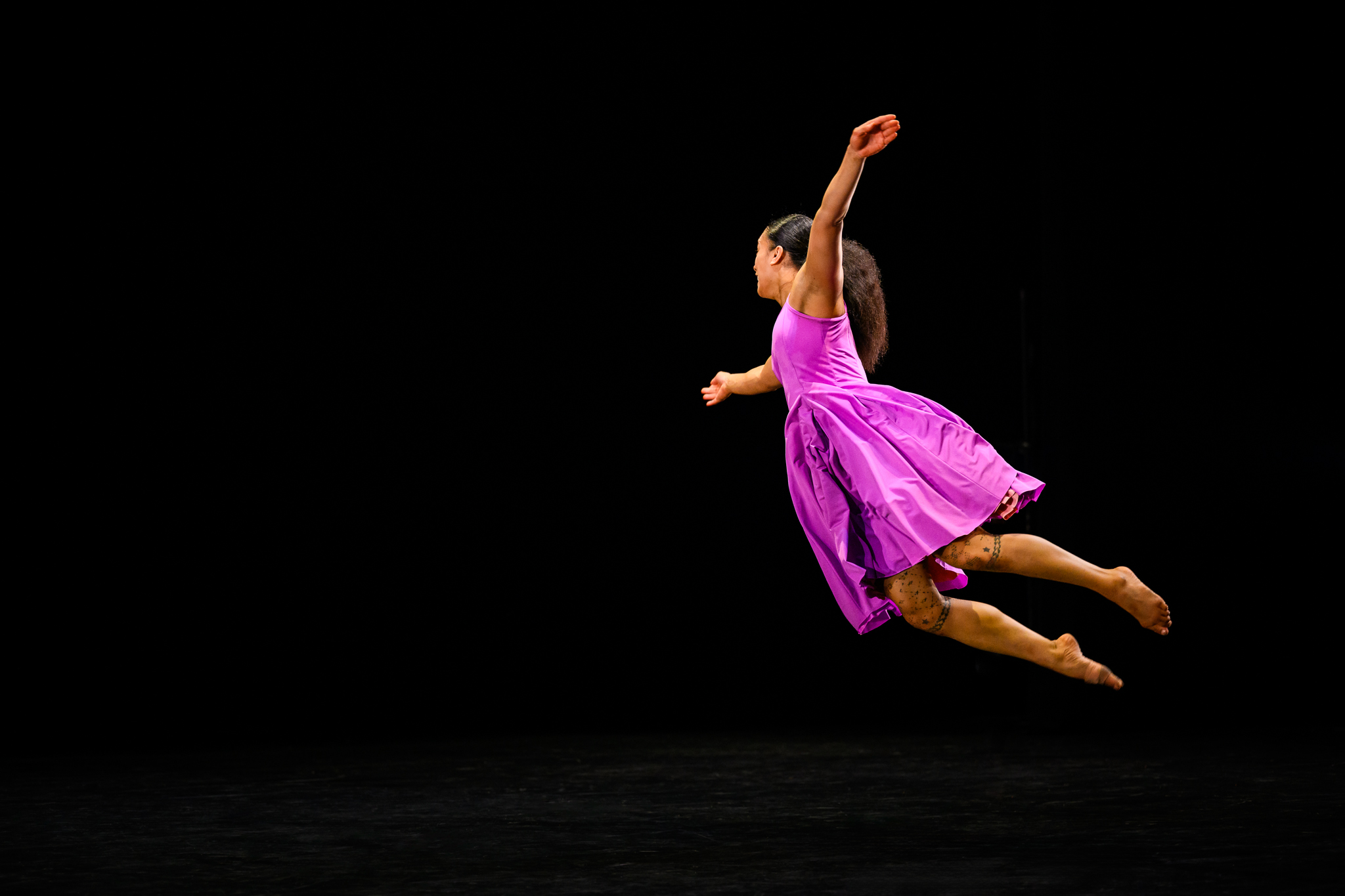
“Esplanade” by Paul Taylor. Photos: Jinki Cambronero
The opportunity to watch a modern-day classic like this does not come around too often. Ieremia’s lineage through dancing for Douglas Wright, who in turn danced for Paul Taylor has given us this opportunity. The evening’s programme provides much to celebrate and to congratulate in a Company that continues to lead the way in signalling the evolution of Pacific contemporary dance and to push forward in new directions.